


-5.jpg)















Thank you! Your submission has been received!
Oops! Something went wrong while submitting the form.
.avif)
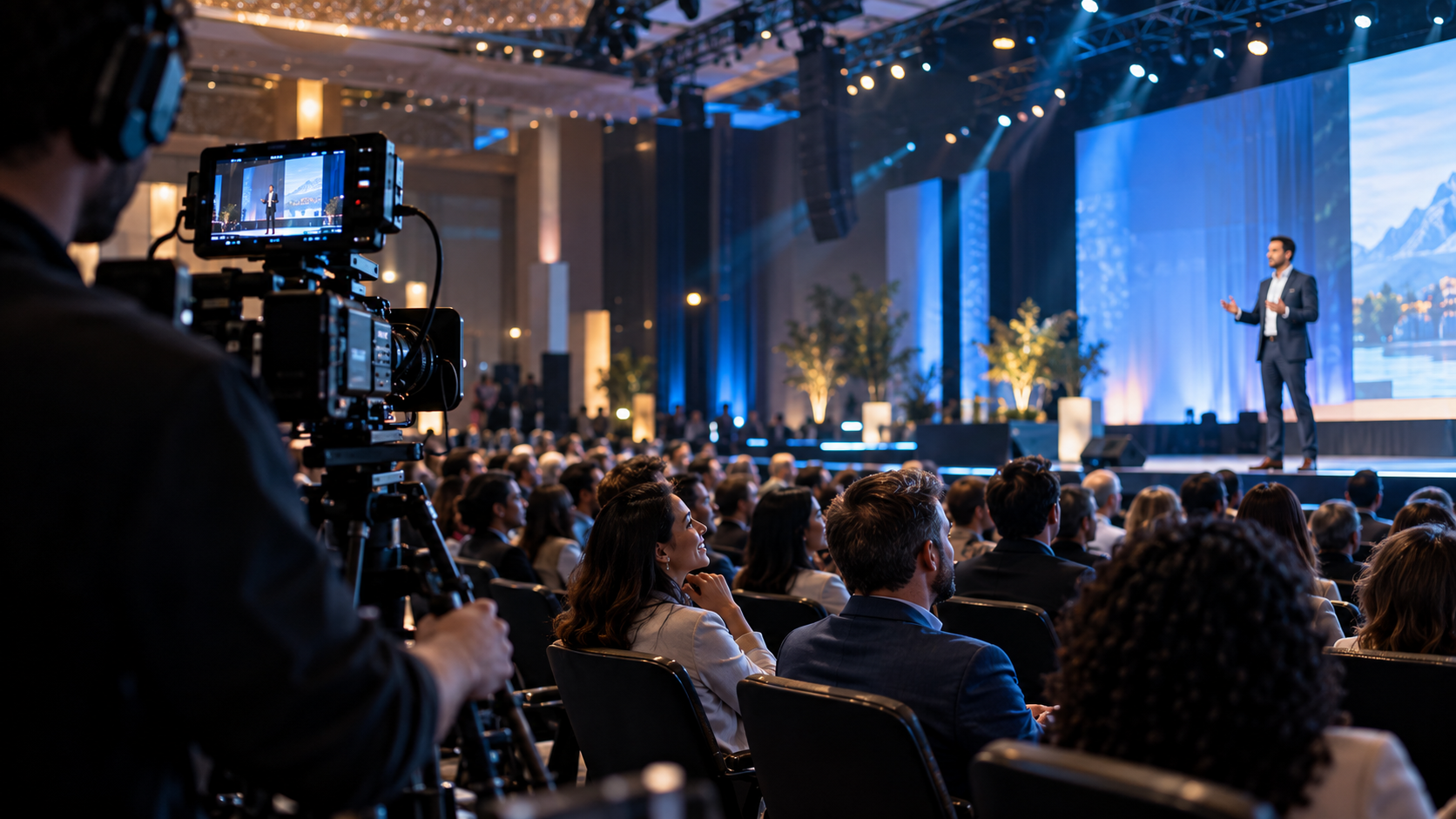
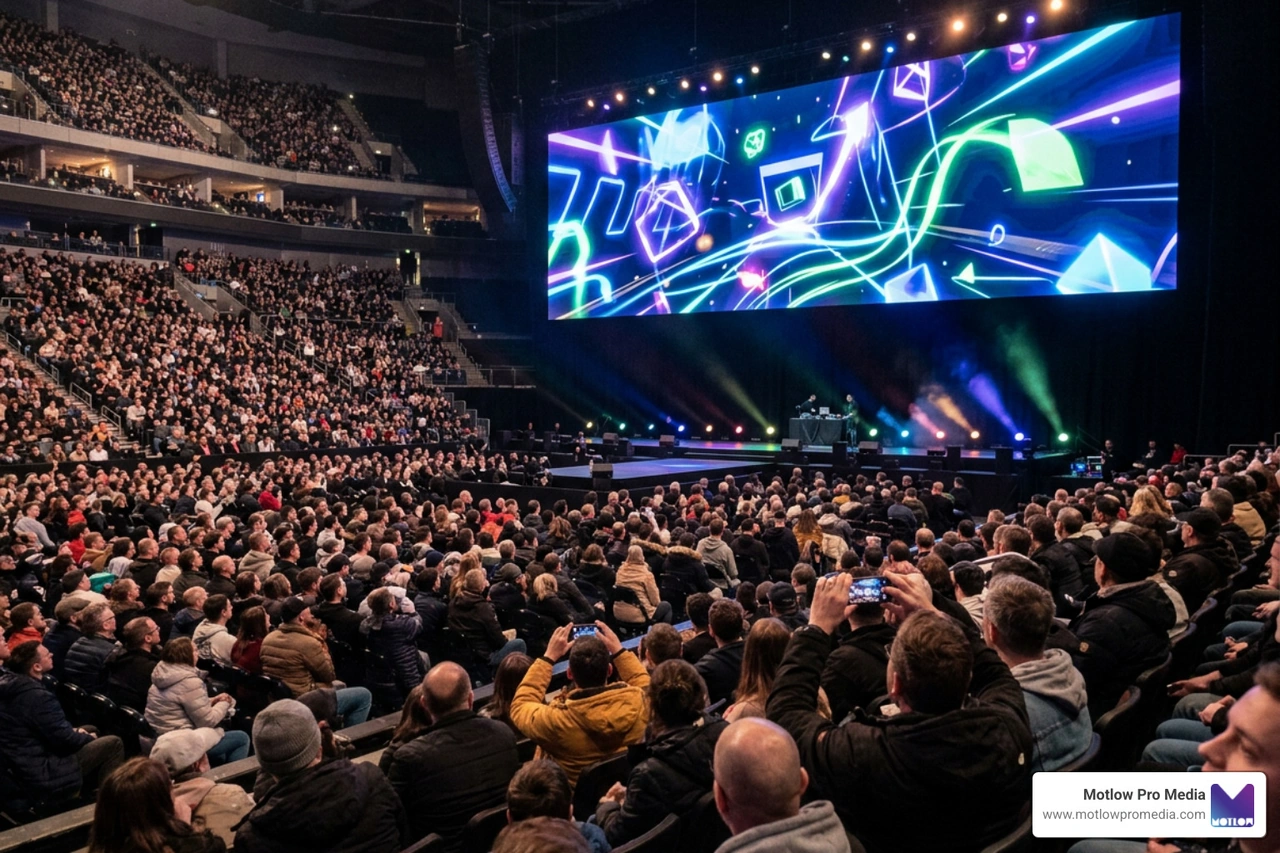
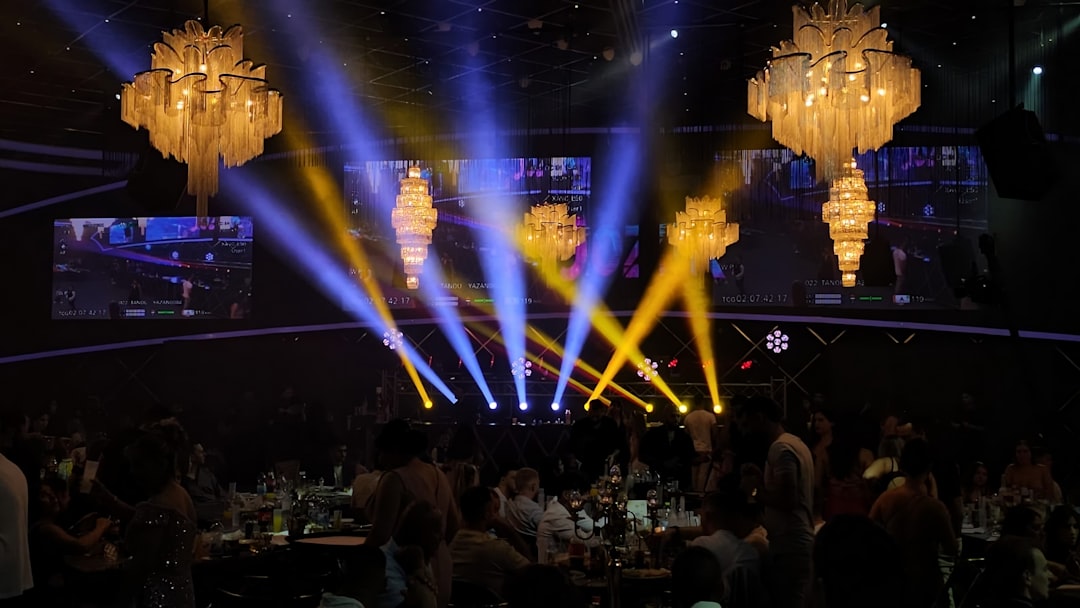
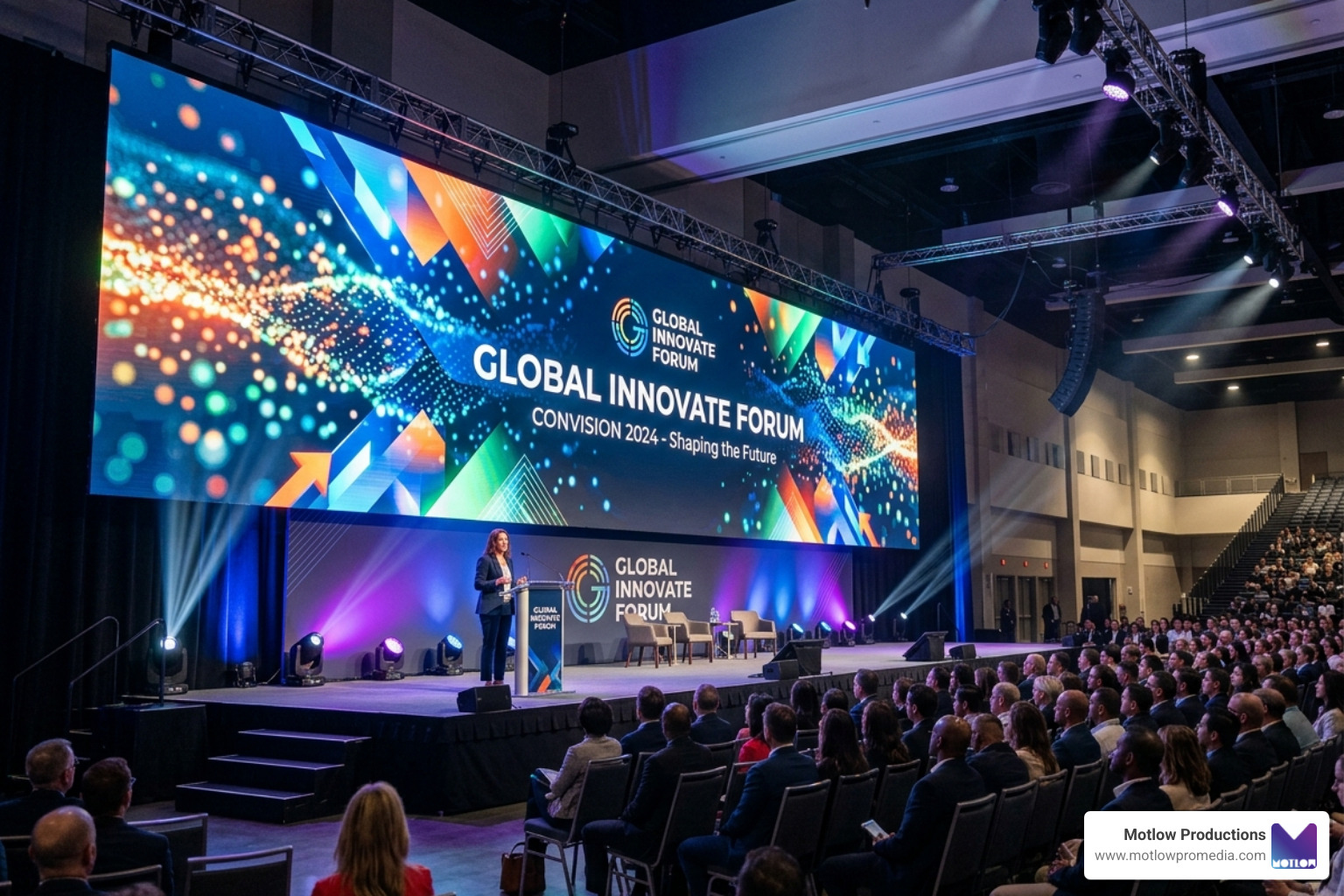
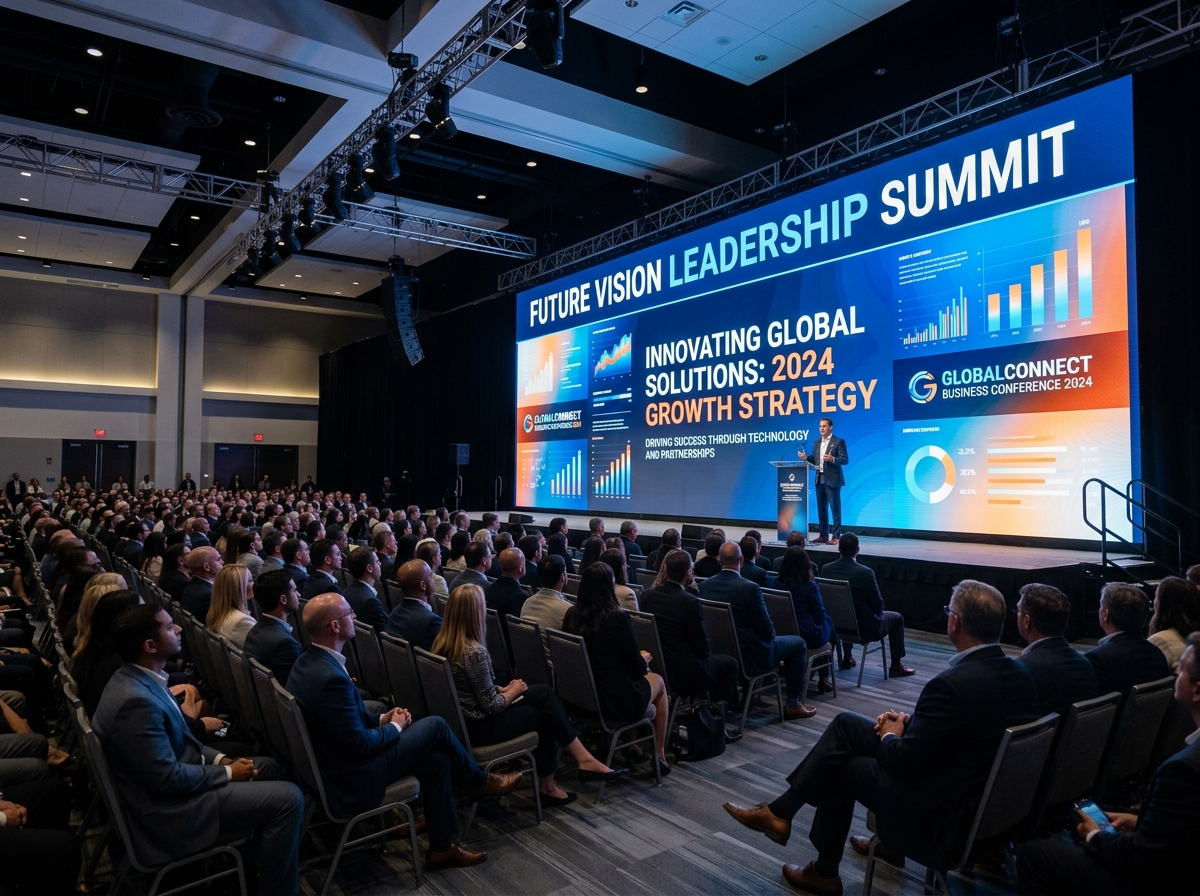
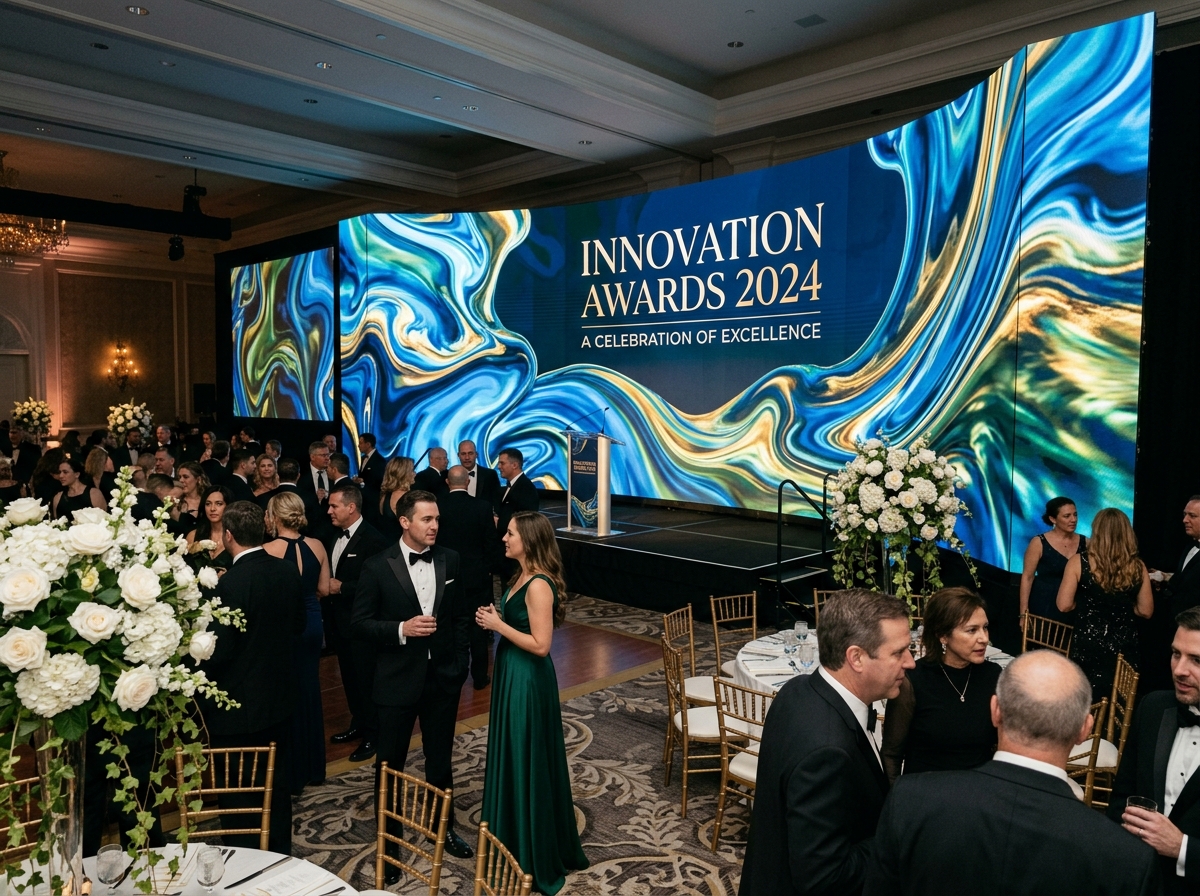
LED wall rental is one of the fastest ways to transform a corporate event from forgettable to unforgettable. Whether you're planning a conference, product launch, or brand activation, a large-format LED screen delivers the kind of visual impact that keeps audiences engaged from the first moment to the last.
Here's a quick overview of what you need to know:
The right LED wall setup doesn't just display content. It shapes how your audience feels in the room.
I'm Miranda Motlow, founder of Motlow Pro Media, and I've spent over a decade producing live events and marketing content where LED wall rental decisions directly shaped the audience experience. That hands-on background is the foundation for everything in this guide.
Explore more about our services and expertise:
When you start looking into high-impact displays, you’ll likely hear two terms used interchangeably: "LED wall" and "Video wall." However, in professional AV, they are quite different animals.
A traditional video wall (often called an LCD video wall) is made up of multiple professional monitors tiled together. While they offer great resolution, they have one major drawback: the "bezel" or the frame around each screen. Even with "ultra-narrow" bezels, you will always see a grid of lines cutting through your content.
An LED wall rental, on the other hand, consists of modular LED panels that snap together perfectly. Because there are no bezels, the result is a completely seamless, uniform surface. Whether your screen is 10 feet wide or 100 feet wide, it looks like one single, massive piece of glass.
The technology behind these screens relies on tiny Light Emitting Diodes (LEDs). You will often see terms like SMD (Surface Mounted Device) or COB (Chip on Board). Without getting too deep into the weeds, SMD is the industry standard for most rentals, providing excellent color reproduction and wide viewing angles. COB is a newer tech often used for ultra-fine pitches where the LEDs are "packaged" together for extra durability and even higher contrast. For those interested in the nitty-gritty, you can explore Rental LED wall technical specifications to see how these diodes are configured.
We know the "C" word is always top of mind: Cost. Pricing for an LED wall rental isn't one-size-fits-all because it depends on the "Three Rs": Resolution, Rental duration, and Rigging complexity.
In major US markets, a standard indoor LED wall rental for a corporate event typically falls between $5,000 and $20,000. If you are doing a massive, custom stage design or a multi-day festival, budgets can scale from $25,000 to over $70,000.
Outdoor rentals often start slightly lower for smaller mobile units—think $4,500 for a towable LED trailer—but can increase quickly if you require large-scale modular builds that need heavy-duty wind bracing. When we help clients plan, we look at the total event media services required, as things like signal processing and on-site labor are just as critical as the panels themselves.
One of the coolest things about modern LED tech is that we aren't stuck in a "16:9 box" anymore. Because the panels are modular, we can build them in almost any configuration.
Want a screen that wraps around a corner? We can do that with 3D corner blocks. Want a wave-like effect or a circular screen over a stage? Curved configurations allow for concave or convex layouts. Some specialized systems even use "Helios strips"—ultra-thin LED components that allow for creative, non-linear designs without the bulk of traditional cabinets. This modular flexibility means your screen can become part of the set design, rather than just a place to show slides.
If you only learn one technical term today, make it Pixel Pitch. Pixel pitch is the distance (in millimeters) from the center of one LED cluster to the center of the next.
Why does it matter? It determines the "minimum viewing distance."
Choosing the wrong pitch can lead to a "pixelated" look if people are too close, or unnecessary costs if you pay for high resolution that no one is close enough to appreciate. At Motlow Pro Media, we follow strict event standards to ensure that sight lines and venue scale are perfectly matched to the hardware. We want your 4K content to actually look like 4K, with flicker-free playback that looks just as good on a smartphone camera as it does in person.
You might be tempted to use an indoor screen for a quick outdoor afternoon presentation, but we strongly advise against it. Indoor and outdoor screens are built for very different environments.
Outdoor LED Walls:
Indoor LED Walls:
For outdoor events like city festivals or public viewings, mobile LED trailers are a fantastic option. These are "plug-and-play" units—essentially a giant screen on a hydraulic arm attached to a truck or trailer. They can be set up in under 30 minutes. However, for a high-end concert tour or a custom trade show booth, modular panels are still king because they allow for advanced image processing equipment to manage complex layouts and multiple video feeds simultaneously.
Renting a giant screen is a bit more involved than renting a car. It’s a logistical dance that requires precision. Here is how we typically handle the process:
When you receive a quote for LED wall rental, make sure it isn't just for the "boxes." A reputable provider should offer a "turn-key" solution. This typically includes:
Size is determined by your "visual goal." If the screen is a backdrop for a presenter, you want it wide enough to frame them without them blocking the "meat" of your slides. A common starting point for a mid-sized room is a 16:9 aspect ratio (like your TV), perhaps 12 feet wide by 7 feet tall. For larger crowds of 500+, you might move up to a 20-foot wide screen. We also consider "trim height"—how high off the floor the screen needs to be so the people in the back row can see over the heads of the people in the front.
Absolutely. This is the primary reason to choose an LED wall rental over a projector. While a projector "throws" light at a surface (which gets washed out by the sun), an LED wall is "direct view"—the pixels themselves are the light source. With brightness levels over 5,000 nits and anti-glare technology, your content will remain vibrant even at high noon.
For 95% of businesses, renting is the way to go.
At the end of the day, an LED wall rental is about more than just "having a big screen." It’s about creating an environment where your message is impossible to ignore. Whether it's a 2.6mm high-res indoor wall for a corporate keynote or a massive 50m² outdoor container for a festival, the right technology bridge builds a connection with your audience.
At Motlow Pro Media, we serve as a hands-off, but hands-on partner by helping connect you with the right LED wall and event technology vendors for your goals, venue, and budget. We simplify the process, coordinate the moving parts, and help you avoid costly mismatches, so you can stay focused on your audience and your message. Think of us as a trusted extension of your team, guiding vendor selection and seamless execution from planning through show day.
Ready to make your next event a visual masterpiece? Transform your event with professional LED services and let's build something incredible together.
Some clients want to give notes in a live Zoom call. Others prefer a group text or email thread. However you like to communicate, we adapt. You’ll never be left guessing where things stand - and you’ll always have a say before anything goes out the door.




Phone:
+1 863-250-8639
.png)
Email:
info@motlowpromedia.com