








-5.jpg)




















































Thank you! Your submission has been received!
Oops! Something went wrong while submitting the form.

.avif)
June 25, 2026
The world's leading animation production studios span every continent and every style, from hand-drawn classics to cutting-edge CGI blockbusters. If you're looking for a quick overview, here are the most recognized names shaping the industry right now:
Animation has grown from a niche art form into a multi-billion dollar global industry. The United States leads in high-end 3D theatrical production, while Japan dominates the 2D anime market with studios like Studio Ghibli and MAPPA driving massive international demand with record-breaking export revenues. Europe contributes a strong tradition of artistic and independent filmmaking.
The milestones that shaped this industry are significant. Walt Disney Animation Studios produced the first-ever animated feature film with Snow White and the Seven Dwarfs. Pixar later changed everything again by releasing Toy Story — the first fully computer-animated feature film. Today, the industry reaches audiences across streaming platforms, theaters, and digital channels worldwide.
I'm Miranda Motlow, founder and CEO of Motlow Pro Media, a Tampa-based media agency focused on short-form content strategy and video production — and I've spent years helping brands understand how animation production studios translate creative vision into content that actually connects with audiences. In this guide, I'll break down the studios, techniques, and industry forces you need to know.
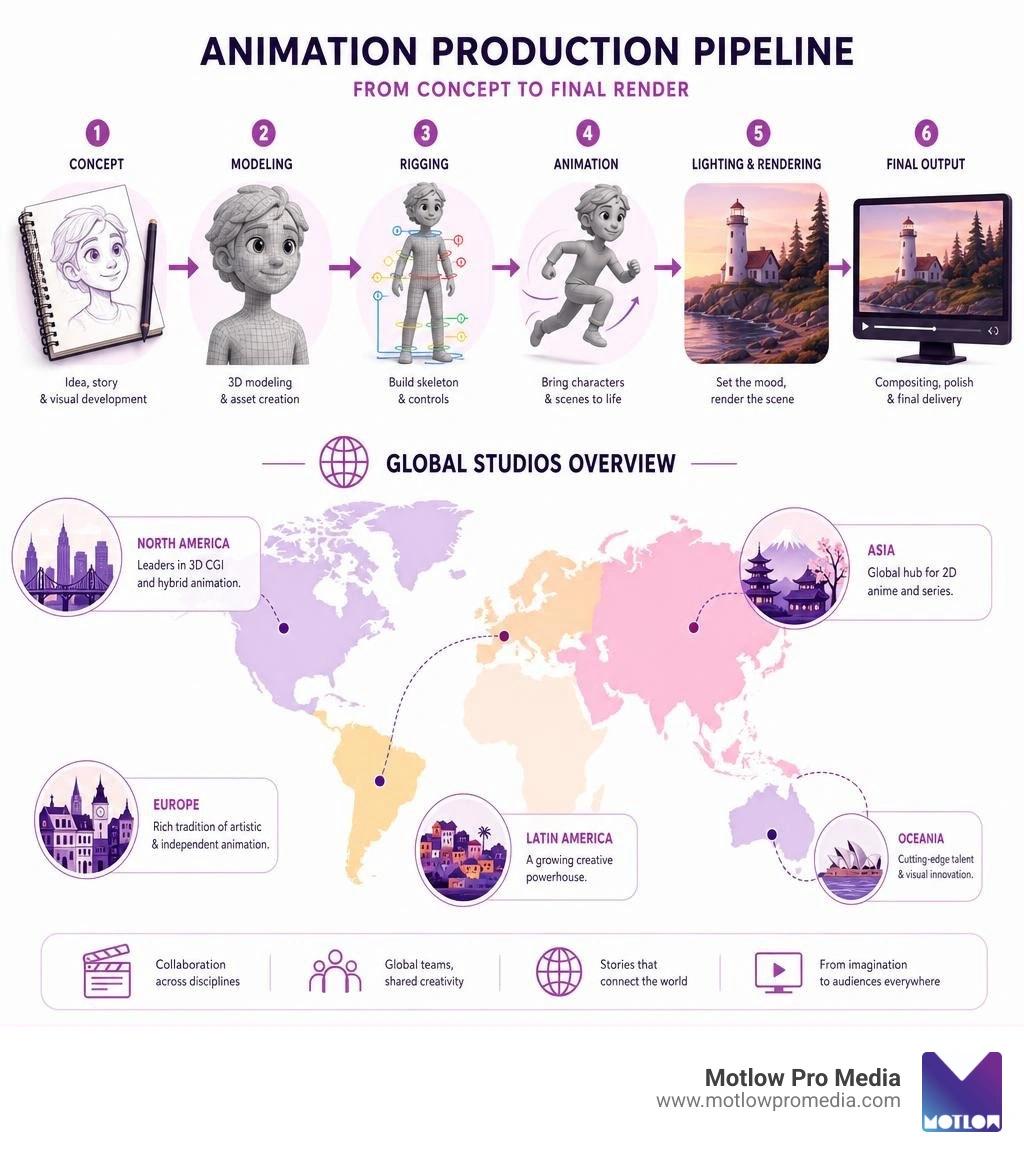
Quick look at animation production studios:
The animation industry is a vast, interconnected ecosystem. While the core goal remains the same—bringing static images or models to life—the way different regions approach this art form varies wildly. From commercial blockbusters to deeply personal indie films, the global landscape is shaped by distinct regional styles, economic models, and cultural histories.
When we look at the foundation of modern animation, three names stand above the rest: Walt Disney Animation Studios, Pixar Animation Studios, and Studio Ghibli. These trailblazers didn't just make popular films; they established the technical and narrative rules that the entire industry still follows today.
Walt Disney Animation Studios laid the groundwork for everything. Over its 100-year history, it transformed animation from a novelty into a respected cinematic medium. By developing the multiplane camera, perfecting character-driven musical storytelling, and establishing the twelve basic principles of animation, Disney created a blueprint that still influences animators in 2026.
Pixar Animation Studios took that blueprint and digitized it. In 1995, Toy Story proved that computer-generated imagery (CGI) could carry the emotional weight of a feature film. Pixar's commitment to story-first filmmaking, paired with its proprietary RenderMan software, revolutionized the industry and pushed traditional hand-drawn animation out of the mainstream theatrical spotlight in the West.
Meanwhile, in Tokyo, Studio Ghibli resisted the digital tide to preserve the magic of hand-drawn art. Co-founded by Hayao Miyazaki and Isao Takahata, Ghibli created worlds of unmatched environmental detail and emotional depth. Studio Ghibli remains the only Japanese animation studio to win the Academy Award for Best Animated Feature, achieving this historic honor for both Spirited Away and the recent masterpiece The Boy and the Heron.
Beyond these individual giants, the global market has organized into powerful regional hubs:
To truly understand how animation production studios operate, we have to look at the physical and digital pipelines they use to build their worlds.
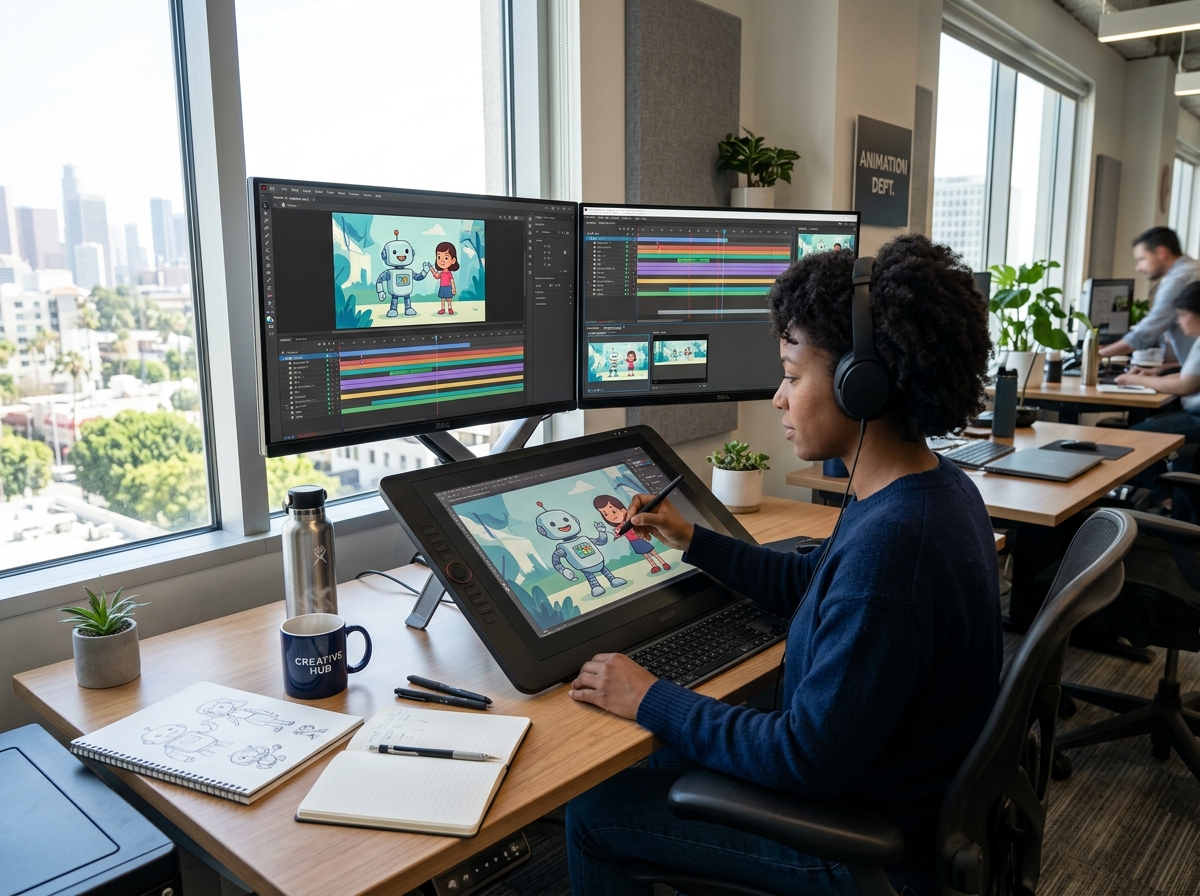
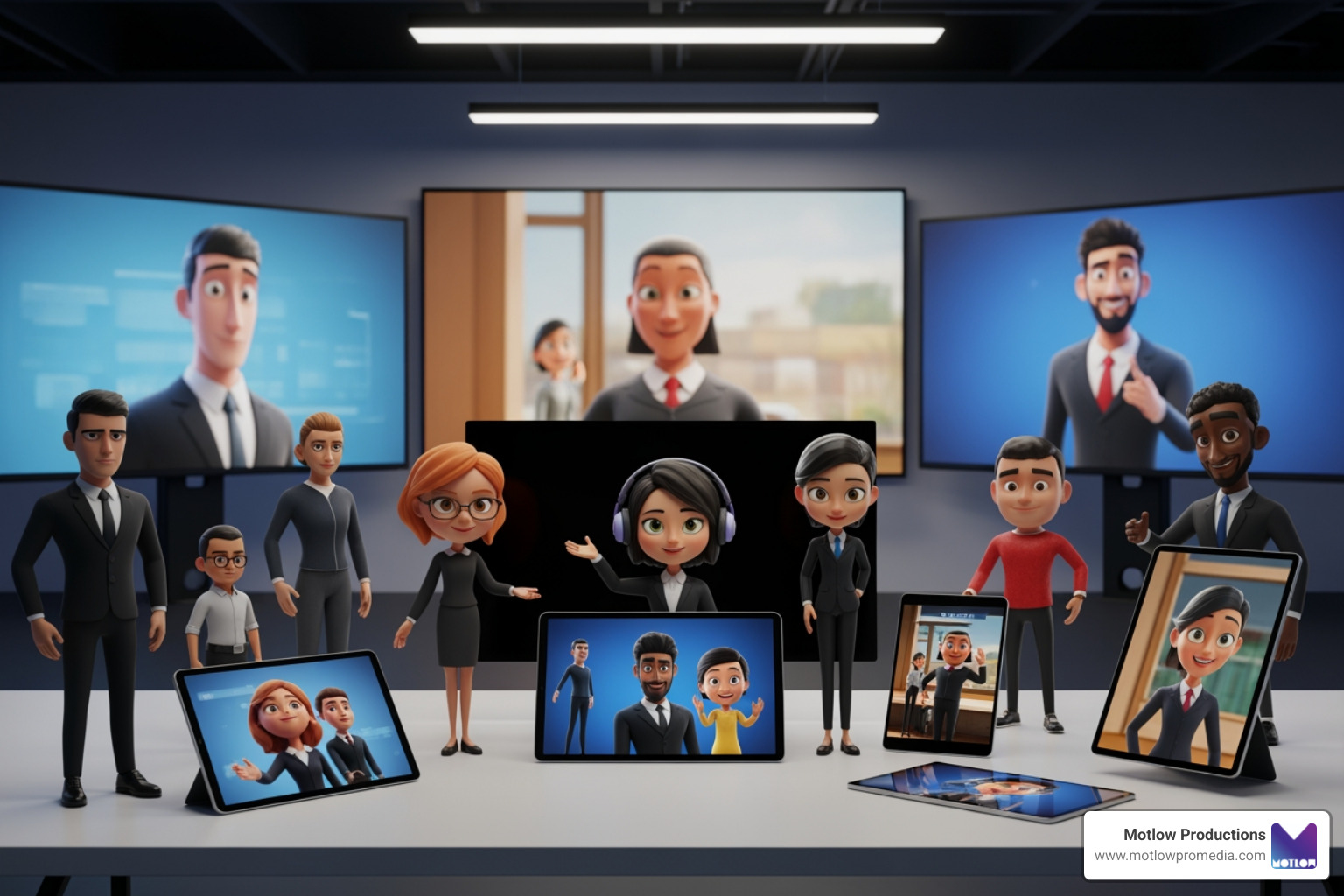
Today, 3D computer-generated imagery (CGI) is the dominant medium for mainstream theatrical releases. This workflow functions much like live-action filmmaking, but inside a virtual space. Instead of drawing every frame, artists build digital models, construct skeletons (character rigging), paint textures, and manipulate virtual lights and cameras.
The strength of 3D CGI lies in its scale and realism. It allows for sweeping camera movements, complex physics simulations (like water, hair, and clothing), and subtle, photorealistic lighting. If you want to see how these techniques translate to professional commercial spaces, checking out a dedicated Animation Video Production Company can show you how digital pipelines are adapted for high-impact brand storytelling.
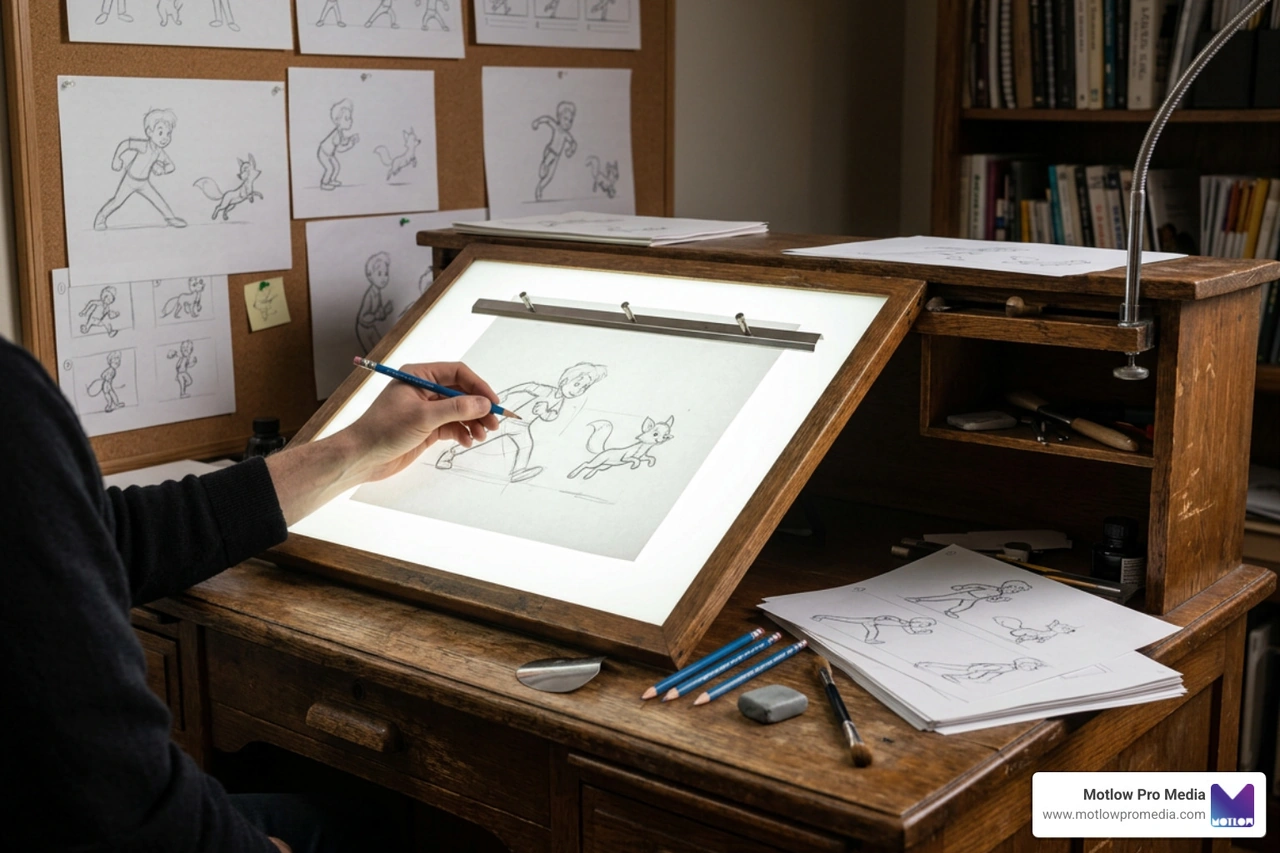
Traditional 2D animation is where the industry began. While classic ink-and-paint on physical acetate cels has largely been replaced by digital drawing tablets and vector software, the core discipline remains unchanged: artists draw the key poses and "in-between" frames to create the illusion of movement.
Today's leading 2D studios often use hybrid workflows, combining the warmth of hand-drawn character performances with digital camera moves and 3D background elements. This approach is highly visible in the works of Mamoru Hosoda's headquarters, Studio Chizu, which has produced visually stunning films like BELLE and MIRAI by blending traditional artistry with modern digital tools.
Stop-motion is perhaps the most physically demanding animation technique. It requires animators to physically manipulate real-world puppets, clay models, or objects frame-by-frame in front of a camera. A single second of footage requires 24 individual micro-adjustments and photographs.
Despite the rise of digital tools, stop-motion has enjoyed a creative renaissance. LAIKA Studios has pioneered this space for two decades, earning multiple Academy Award nominations by combining handcrafted physical puppets with advanced 3D-printed face replacement systems and CGI background extensions.
On the other side of the Atlantic, Aardman Animations continues to champion classic claymation and physical model-making. Aardman is the only British studio to win the Academy Award for Best Animated Feature and holds the record for producing Chicken Run, the highest-grossing stop-motion animated film of all time.
The business side of animation is defined by a constant tension between massive corporate distribution networks and small, artist-driven independent spaces.
The vast majority of mainstream animated content is owned and financed by a handful of media conglomerates:
These conglomerates treat animation as highly valuable intellectual property (IP). A successful animated character doesn't just sell movie tickets; it drives theme park attractions, toy lines, video game spin-offs, and streaming subscriptions. While this corporate backing provides massive budgets and global reach, it can sometimes lead to creative conservatism, where studios rely heavily on sequels, spin-offs, and established franchises.
In contrast to corporate giants, independent and boutique animation studios operate on a smaller scale, prioritizing creative freedom and distinct visual styles.
Independent studios like Cartoon Saloon rely on co-production models, government arts funding, and partnerships with streaming platforms to bring their unique visions to life. This independence allows them to take massive artistic risks, telling culturally rich stories that corporate studios might deem too niche for a global audience.
Other boutique agencies, such as Little Zoo Studio, act as specialized, turn-key external partners. They provide high-quality, character-driven animation for feature films, games, and commercials without requiring clients to build massive in-house departments. By integrating directly into existing pipelines, these boutique teams offer a flexible, collaborative model that helps major studios and independent creators alike cross the finish line on time and on budget.
As the entertainment landscape evolves, the day-to-day reality of working within animation production studios is shifting rapidly.
For workers in the United States, union representation is a cornerstone of career stability. The Animation Guild (IATSE Local 839) represents thousands of artists, writers, and technicians in the industry.
When a studio negotiates an agreement with The Animation Guild, it commits to industry standards regarding:
For animation workers, union representation provides a vital safety net in an industry known for tight deadlines, intense crunch periods, and project-based freelance contracts.
Breaking into the animation industry requires a mix of specialized artistic talent and technical adaptability. Some of the most in-demand roles include:
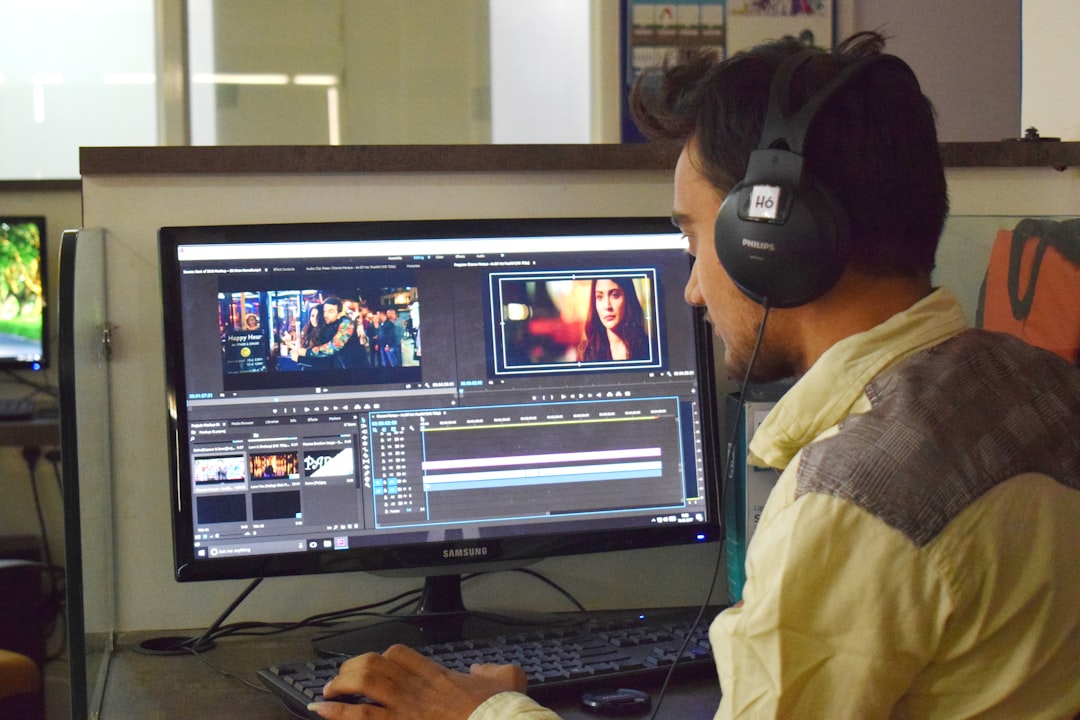
To stand out, aspiring animators need a highly polished, focused portfolio or "demo reel" that showcases their specific strengths. Mastery of industry-standard software—such as Maya, Toon Boom Harmony, Blender, and Unreal Engine—is essential, but studios ultimately look for strong draftsmanship, a deep understanding of physical mechanics, and collaborative communication skills.
The rise of platforms like Netflix, Amazon Prime, and Apple TV+ has completely rewritten the animation playbook. Historically, studios were limited by theater screens and Saturday morning broadcast blocks. Today, streaming platforms have created an insatiable demand for diverse, episodic content.
This has opened the door for mature animated dramas, experimental anthologies (like Love, Death + Robots), and global co-productions that would have struggled to find a home in traditional theatrical distribution. Streamers are also investing heavily in localized content, funding studios in Europe, Asia, and Latin America to create authentic stories for regional audiences.
For businesses looking to capture attention in this crowded digital space, adopting a similar, highly engaging approach through Animated Explainer Videos has become a vital strategy for clear, modern brand communication.
Animation is an incredibly capital-intensive business. A single theatrical feature can take four to five years to produce and cost upwards of $150 million. If a film underperforms at the box office, the financial blow can be devastating.
Common factors leading to studio closures or mergers include:
The future of animation is being defined by rapid technological evolution and shifting audience tastes:
Animation isn't just for entertainment; it is one of the most powerful communication tools available to modern brands. Because animation is not bound by the laws of physics or the limitations of live-action cameras, it can make abstract concepts simple, engaging, and memorable.
To see how companies use these visual techniques to train employees, pitch investors, and explain complex products, you can explore our comprehensive Corporate Animation Video Guide.
From the handcrafted stop-motion puppets of LAIKA to the digital mastery of Pixar, animation production studios continue to push the boundaries of how we tell stories. Understanding the artistry, technology, and business behind these studios shows just how much work goes into creating the visuals we love.
At Motlow Pro Media, we bring that same level of strategic thinking and creative passion to the corporate space here in Tampa, Florida. We specialize in high-impact short-form content strategy and production, designed to help businesses connect with their audiences in a noisy digital world.
Our unique "hands-off, but hands-on" partnership model means we handle the heavy lifting, clear communication, and seamless execution, acting as a trusted, reliable extension of your internal team. Whether you need to simplify a complex message or elevate your brand's digital presence, we are here to help you make something incredible.
Ready to bring your brand's story to life? Explore our services at Motlow Pro Media Services and let's start collaborating.
Some clients want to give notes in a live Zoom call. Others prefer a group text or email thread. However you like to communicate, we adapt. You’ll never be left guessing where things stand - and you’ll always have a say before anything goes out the door.





Phone:
+1 863-250-8639
.png)
Email:
info@motlowpromedia.com