
















-5.jpg)


































































Thank you! Your submission has been received!
Oops! Something went wrong while submitting the form.

.avif)
Strategic content planning is the practice of aligning content creation with business goals through structured workflows, audience research, and measurable objectives. Here's what it involves:
Key Components of Strategic Content Planning:
The average internet user spends roughly six hours and 40 minutes online daily. For businesses aiming to build brand recognition and attract customers, they need to reach them where they are: on their screens.
Yet many organizations struggle to turn that awareness into action. They create content without clear direction, waste resources on pieces that miss the mark, and wonder why their efforts don't drive results.
The problem isn't a lack of creativity or effort. It's a lack of strategic content planning.
Without a structured plan, content becomes an afterthought - created in silos, published inconsistently, and measured by vanity metrics that don't connect to business goals. With a plan, content becomes a competitive advantage that guides customers through their journey, builds brand authority, and generates measurable ROI.
I'm Miranda Motlow, founder and CEO of Motlow Pro Media, where I've spent over a decade helping casino marketing teams and corporate clients execute strategic content planning that captures attention and drives guest engagement through video. My background in journalism and business storytelling has taught me that successful content requires both creative vision and operational discipline.
In our experience at Motlow Pro Media, we often see people using the terms "content strategy" and "content plan" interchangeably. However, understanding the nuance between them is the first step toward success.
Think of it like this: your content strategy is your "Why" and "Who." It defines your vision, your brand voice, and what success looks like. Your content plan, on the other hand, is the "How" and "When." It is the operational roadmap that activates your vision. Strategy is the ongoing practice of planning for the creation, delivery, and governance of useful, usable, and effective content that ensures your efforts serve a purpose.

Focus
Key question
Deliverables
Timeline
Without a roadmap, you're essentially driving in the dark. Strategic content planning ensures that every dollar spent on production—whether it's a blog post or a high-end corporate video—contributes to your ROI.
Consider this: six hours and 40 minutes The average internet user spends roughly six hours and 40 minutes online daily. For businesses aiming to build brand recognition and attract customers, they need to reach them where they are: on their screens.. If your content doesn't have a specific purpose, it will simply get lost in the digital noise. A solid plan improves resource efficiency, ensures omnichannel consistency, and keeps your team aligned so you aren't duplicating work across departments.
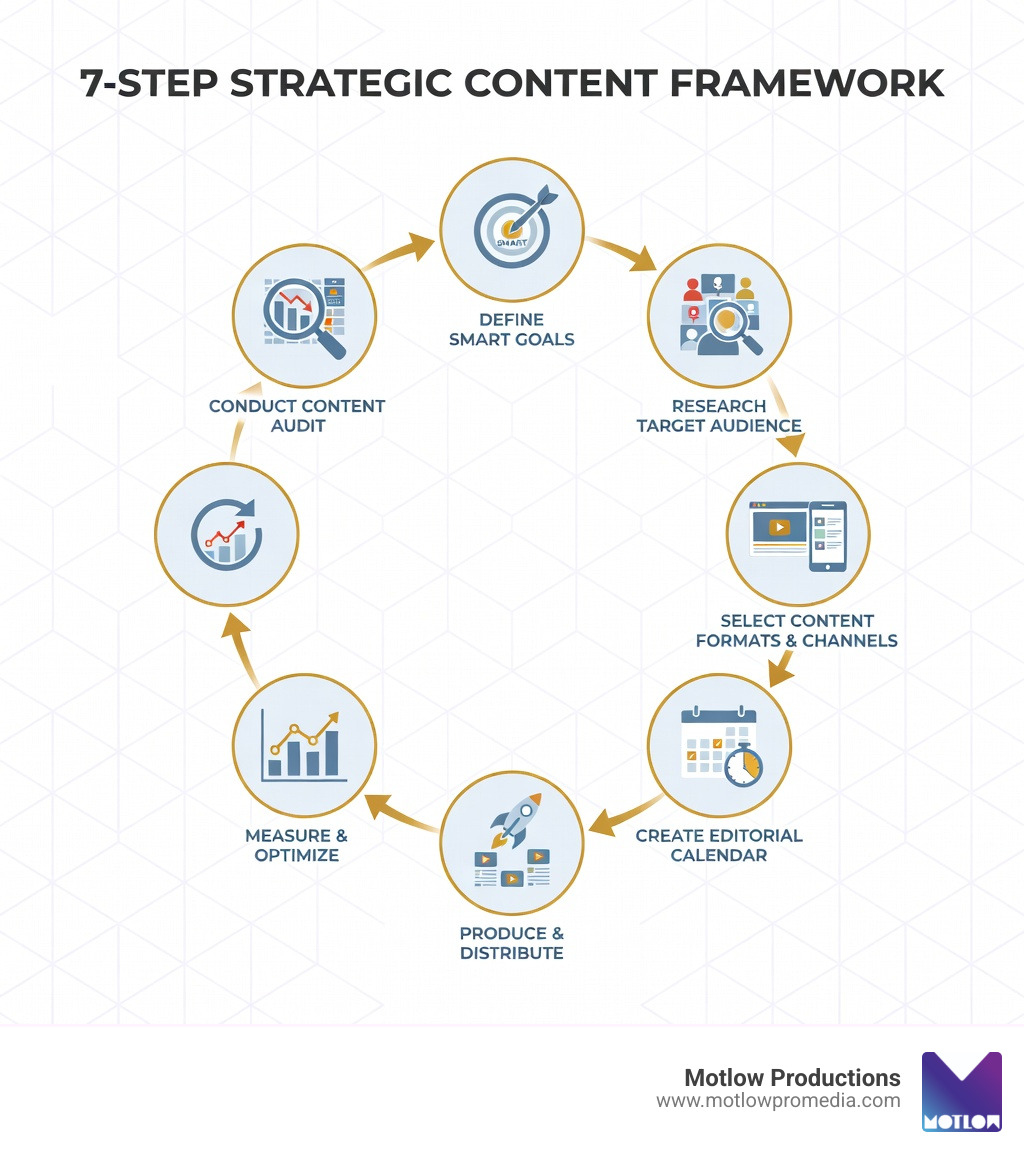
We can't hit a target we haven't set. Every great plan begins with SMART goals: Specific, Measurable, Achievable, Relevant, and Time-bound.
Are you looking for lead generation? Brand awareness? A reduction in customer support tickets? By defining these objectives early, you can choose the right KPIs to track. If you're feeling overwhelmed by where to start, you can download our free flowchart Are you ready to put your content strategy to work to further your company's key objectives? to help visualize how your content connects to your broader business mission.
Before we start building new content, we need to look at what we already have and who we are talking to. This foundation prevents us from "guessing" what our audience wants.
A content audit is essentially a "health check" for your website and social channels. You need to create a URL inventory and look at performance metrics like page views, bounce rates, and conversions. This helps you identify "content decay"—older pieces that were once popular but now need a refresh.
For larger sites, doing this manually is a nightmare. You're better off using a crawler like Screaming Frog to pull a full list of your URLs. This allows you to automate the process so you can focus on analyzing the data rather than just collecting it.
Who are you trying to reach? To get strategic content planning right, you must move beyond basic demographics. You need to understand their psychographics: what keeps them up at night? What are their decision criteria?
To truly get content strategy right, you must not only understand who your customer is, but also their motivations, pain points, and decision criteria. You can find this data in places you already own. Talk to your customer service team—they know the most common complaints. Use social listening to see what people are saying about your industry. This research allows you to create buyer personas that actually feel like real people, not just cardboard cutouts.
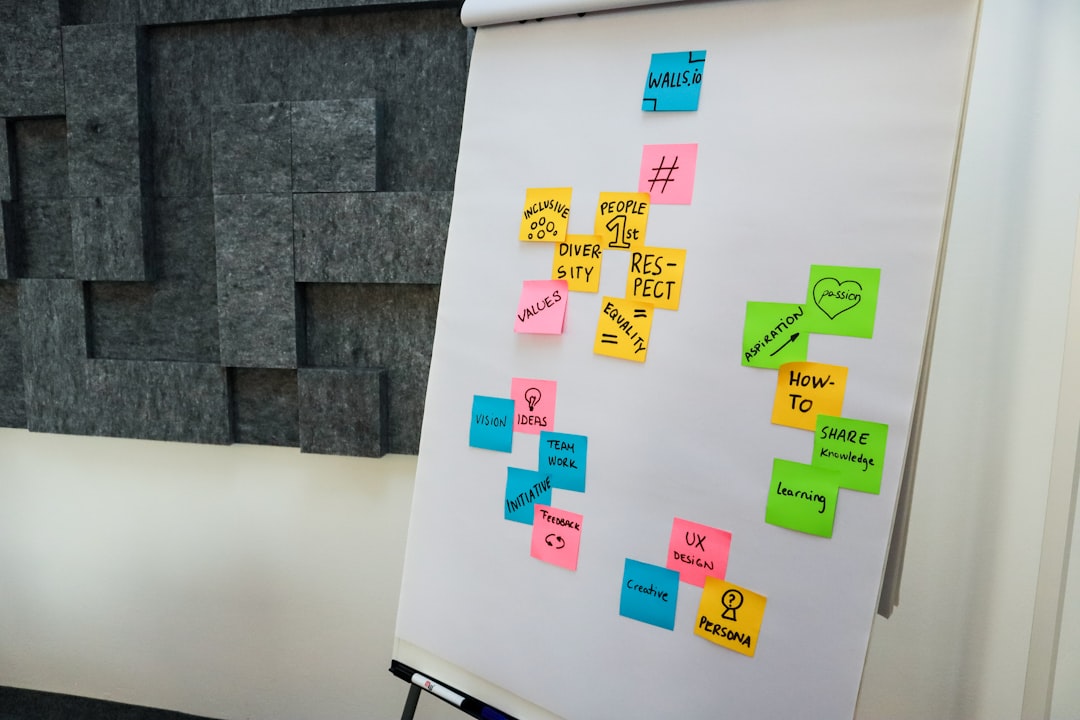
Once you have your data, it’s time to get creative. This is where we bridge the gap between "we need more leads" and "let's film a series of expert interviews."
Not every piece of content belongs on every channel. A deep-dive whitepaper might be great for LinkedIn, but a behind-the-scenes look at your company culture is better suited for Instagram.
At Motlow Pro Media, we are huge believers in the power of video. It is one of the most effective ways to build topic authority quickly. Professional production ensures that high-quality video content exceeds expectations and lifts a brand's message. If you want to see how other organizations use video to educate their audience, check out our YouTube channel our YouTube channel for more explainer content!.
The "content brief" is the unsung hero of the creative process. It is the project blueprint that ensures the person writing the script or the blog post knows exactly what the goal is. Without a brief, you end up with "fantasy expectations"—where you ask for a 500-word blog post that covers the entire history of the internet.
A successful brief should include SEO principles, primary keywords, target audience details, and a clear call to action (CTA). For a deeper look at what to include, explore these 5 elements of a highly successful content brief This detailed guidance helps your teams create material with strong organic search potential while following SEO principles..
Great content isn't just about the "creative spark"; it's about the machine that keeps it running. This is where governance comes in.
Governance is the set of rules that keeps your brand consistent. It defines who has the final say, who checks for legal compliance, and what your brand voice sounds like.
Many organizations confuse content-related tactics People often confuse content strategy with content-related tactics, like copywriting or editing. A content strategy comes before tactics. with the strategy itself. Tactics are the "doing," but governance is the "overseeing." To maintain a high standard, you should develop a comprehensive style guide that outlines your preferred tone and narrative frameworks.
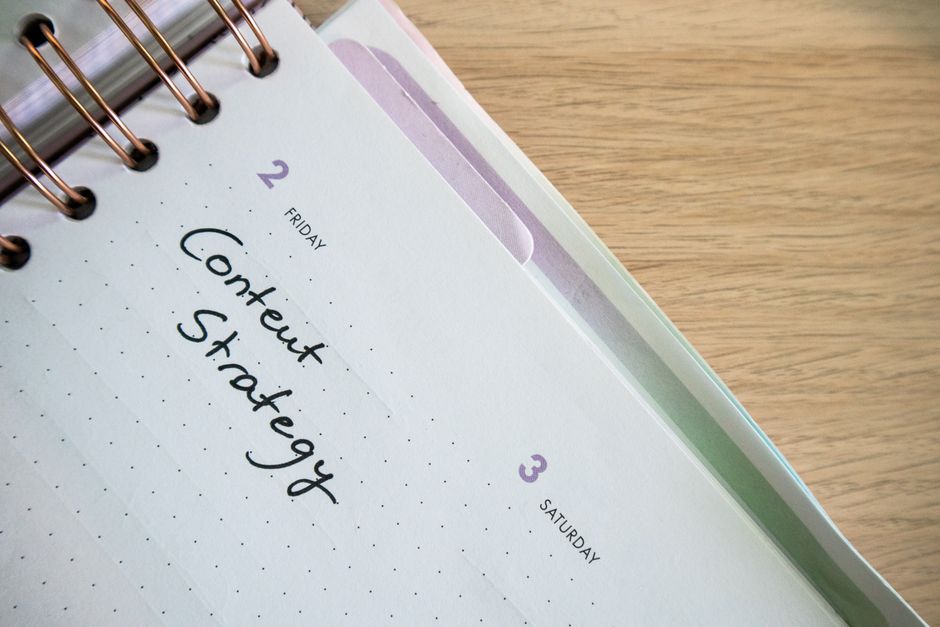
An editorial calendar is your central source of truth. It prevents the "what should we post today?" panic. Your calendar should account for seasonality—for example, if you sell tax software, you want your content peaking in January, not July.
You can use Google Adwords Keyword Planner If you don’t already have an understanding of your business’s seasonality in terms of search, utilize Google Adwords Keyword Planner. to see when interest in your target topics is highest. This allows you to plan your production 3-6 months in advance so you're ready when the search volume spikes.
If you don't measure it, you can't improve it. We use data to turn our content from a static asset into an agile resource.
Not all content should live forever. Sometimes, the best thing you can do for your SEO is to unpublish or redirect a page that is no longer relevant. Content has the power to make or break the user experience: it's impossible to design a good user experience with bad content. Bad content actually hurts the user experience.
We recommend using a content scorecard to review your assets every three months. If a piece isn't performing, ask yourself: Can it be optimized? Should it be merged with another post? Or should it be deleted with a proper 301 redirect? To understand the role data plays in this, you can watch the episode on YouTube Related: Listen to Professor Gupta explain data analytics’ pivotal role in digital marketing on The Parlor Room podcast, or watch the episode on YouTube..
The biggest mistake is setting vague objectives like "we want more engagement." Engagement doesn't pay the bills—conversions do. Other common pitfalls include ignoring audience data, keyword stuffing (which hurts your SEO), a total lack of governance, and inconsistent publishing schedules that confuse your audience.
Stay agile! We recommend quarterly audits to see what's working and what isn't. Use social listening to keep an eye on industry trends and competitor moves. Your editorial calendar should be a "living document"—flexible enough to accommodate a sudden industry shift while still keeping you on track for your long-term goals.
For smaller teams, Google Sheets or Trello can work wonders. As you scale, you might look into Asana or CoSchedule for better task management and collaboration. For large enterprises, a dedicated Content Management System (CMS) with built-in workflow tools is often the best choice.
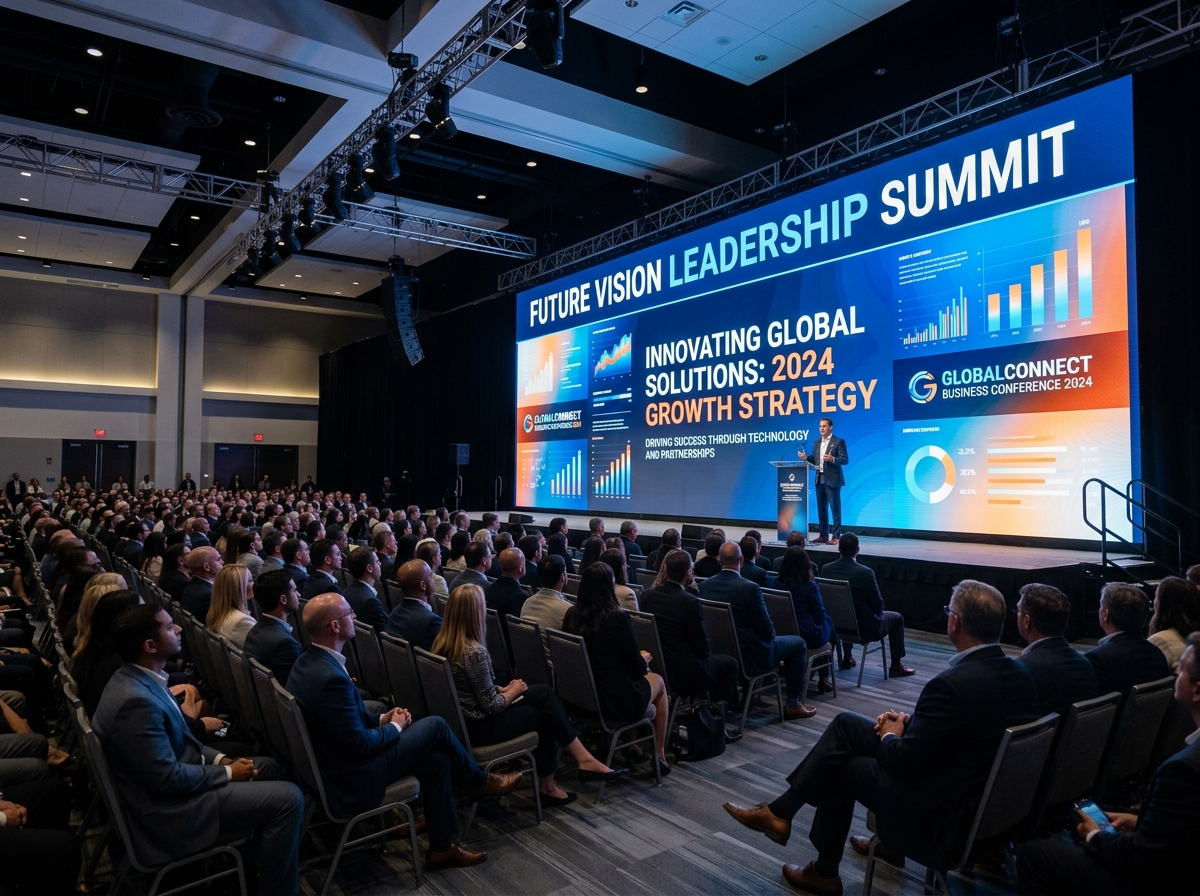
At Motlow Pro Media, we know that strategic content planning is the difference between a video that sits on a shelf and a video that builds a business. Whether you need live event support, corporate storytelling, or long-term media leadership, we act as a trusted extension of your team to ensure your message hits home.
Ready to take your content to the next level? Let's build a strategy that actually delivers. Visit us at Motlow Pro Media to learn how we can help you lead with media.
Some clients want to give notes in a live Zoom call. Others prefer a group text or email thread. However you like to communicate, we adapt. You’ll never be left guessing where things stand - and you’ll always have a say before anything goes out the door.





Phone:
+1 863-250-8639
.png)
Email:
info@motlowpromedia.com