






-5.jpg)

































Thank you! Your submission has been received!
Oops! Something went wrong while submitting the form.

.avif)
May 20, 2026
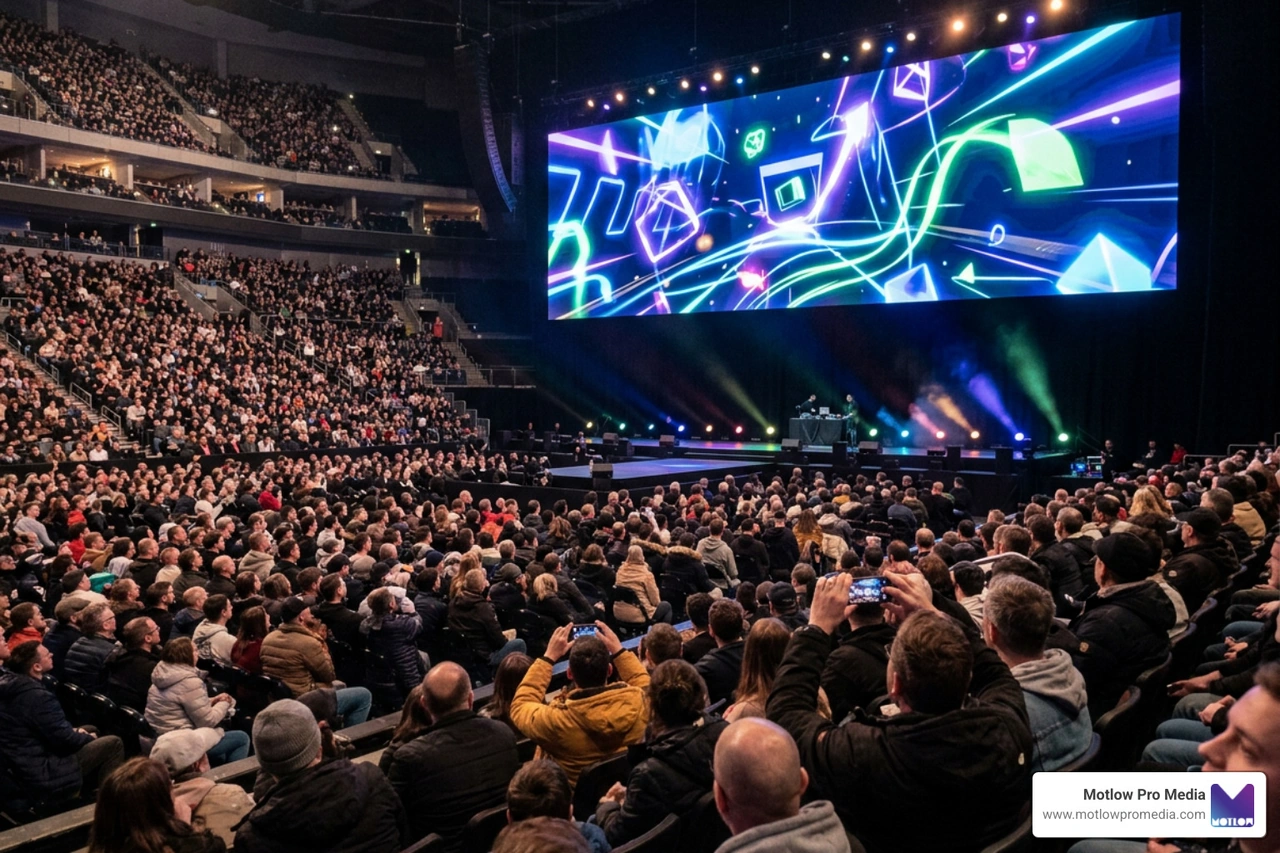
Large scale productions are complex, high-volume operations that require far more than money to succeed — they demand precise coordination, the right methods, and a clear strategy from day one.
Here's what large scale production actually involves:
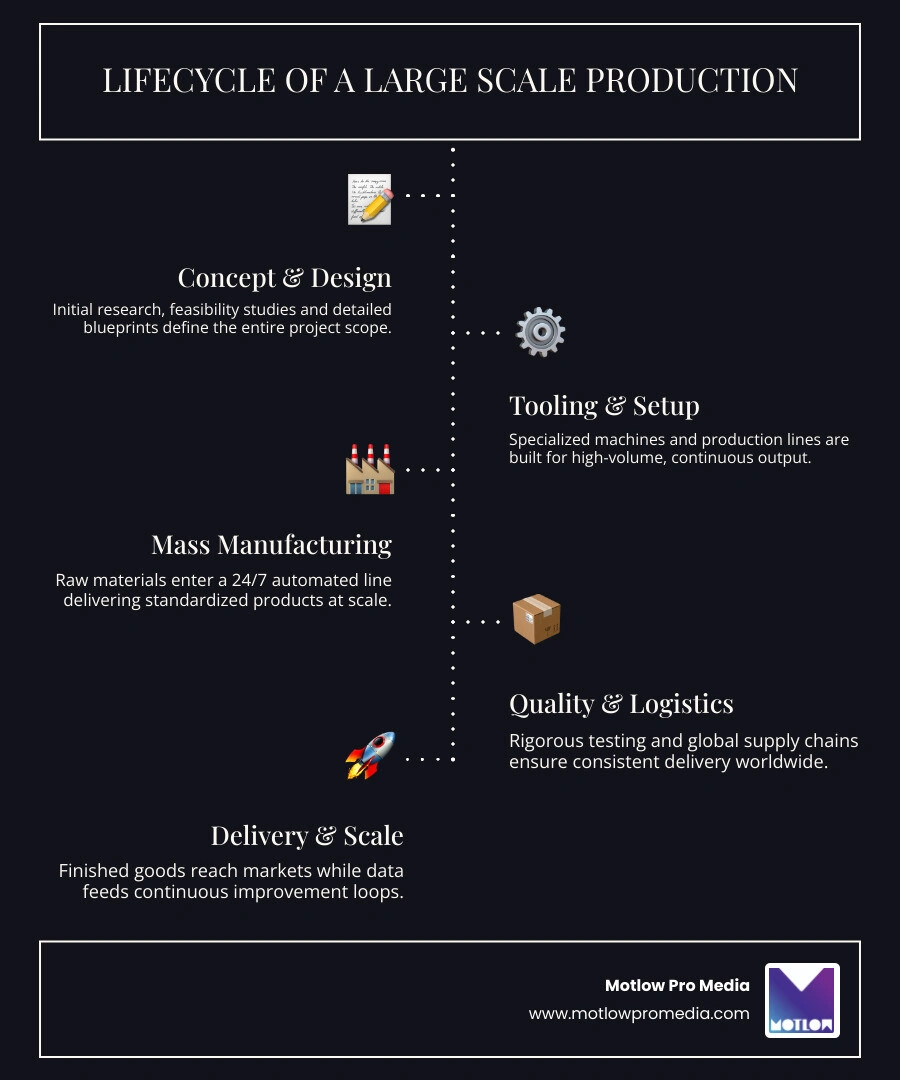
Whether you're talking about a factory producing 130,000 parts per year, an aircraft manufacturer with 12 assembly lines across five continents, or a live media event broadcast to thousands — the core challenge is the same: how do you keep quality high when everything gets bigger?
That question is harder to answer than most people expect.
I'm Miranda Motlow, founder and CEO of Motlow Pro Media, with over a decade of experience delivering large scale productions across live events, long-form content, and high-stakes corporate media. In this guide, I'll break down exactly what it takes to scale production without losing control of quality, budget, or execution.
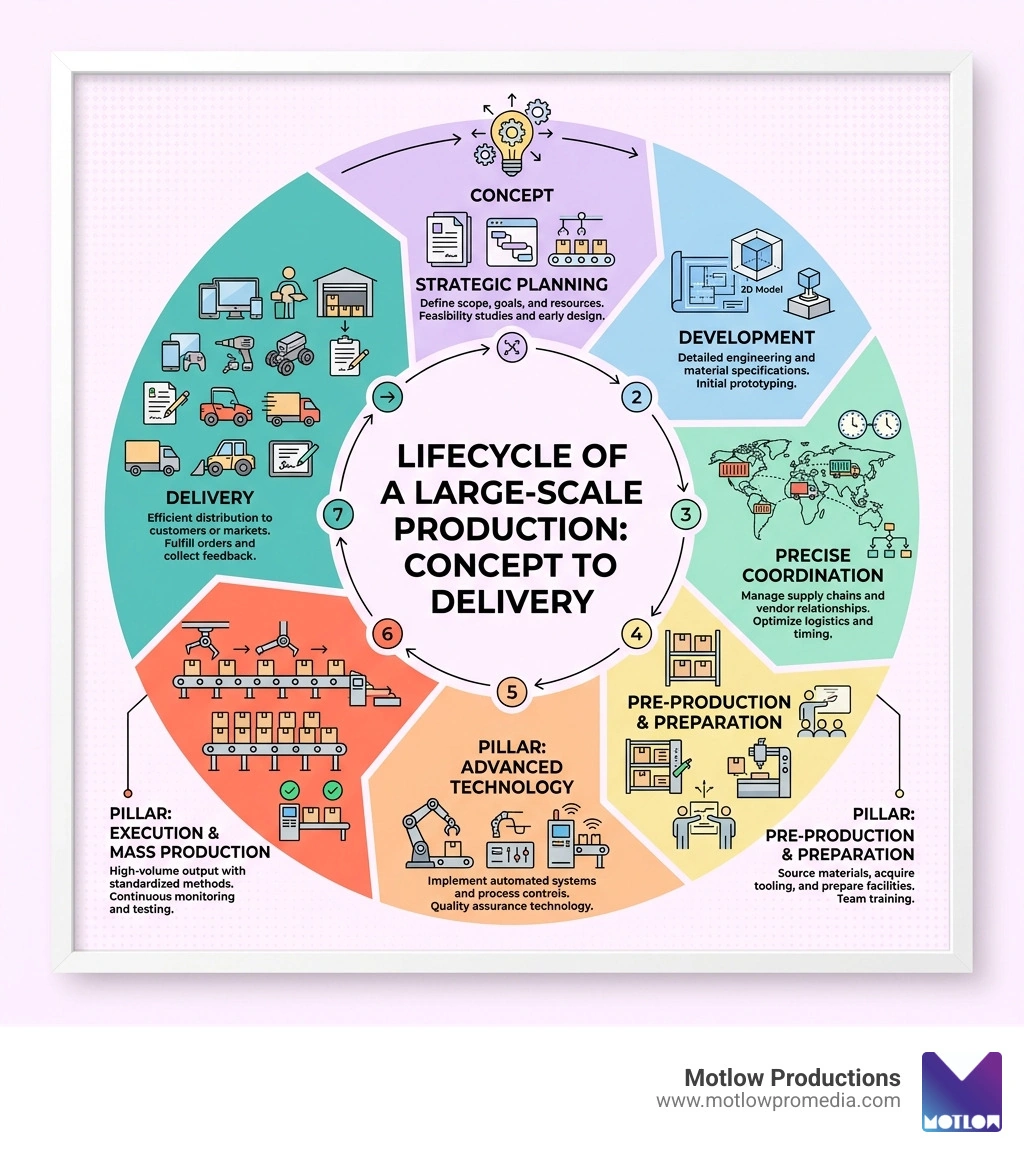
Glossary for Large scale productions:
To truly understand the scales of production, we first have to look at where we started. Before the Industrial Revolution, almost everything was "one-off" or "job production." If you wanted a pulley block for a ship, a craftsman made it by hand. It was beautiful, but it was slow and expensive.
The shift toward Large scale productions began when we realized that by standardizing parts, we could use machines to do the heavy lifting. This led to the birth of mass production: the high-volume creation of standardized products using a constant flow, often on assembly lines.
The evolution didn't happen overnight. It moved from the early mechanical innovations of the 18th century to the sophisticated, data-driven systems we use today in 2026. Key to this was the concept of interchangeable parts—ensuring that a bolt made on Monday fits a nut made on Friday.
Job production
Batch production
Large-scale or mass production
One of the earliest "wow" moments in history occurred at the Portsmouth Block Mills. By 1808, they were using 45 machines to churn out 130,000 pulley blocks every year. Before that, it was all manual labor.
Then came the heavy hitters. Henry Ford changed the world with the Model T. He didn't just build a car; he built a system using 32,000 different machine tools. This enabled mass production on a scale that made automobiles accessible to the average person, not just the wealthy elite.
Even Thomas Edison got in on the action. At his iron ore processing plant, he managed to process 20,000 tons of ore per day. How? By using two shifts of just five men each. That kind of output-to-labor ratio was unheard of at the time and set the stage for the automated world we live in now.
The most significant change in Large scale productions has been the shift in workforce skills. In the early days, you needed 110 workers to do what 10 men could eventually accomplish with the right machinery.
Electrification played a massive role here. When factories switched from steam to electric motors, they saw an immediate 30% increase in output. Why? Because they could arrange machines based on the workflow rather than where the power shafts were located.
Today, we see this same evolution in media. Our Onsite Event Production Complete Guide highlights how we've moved from massive crews to streamlined, tech-heavy teams that deliver higher quality with more precision.
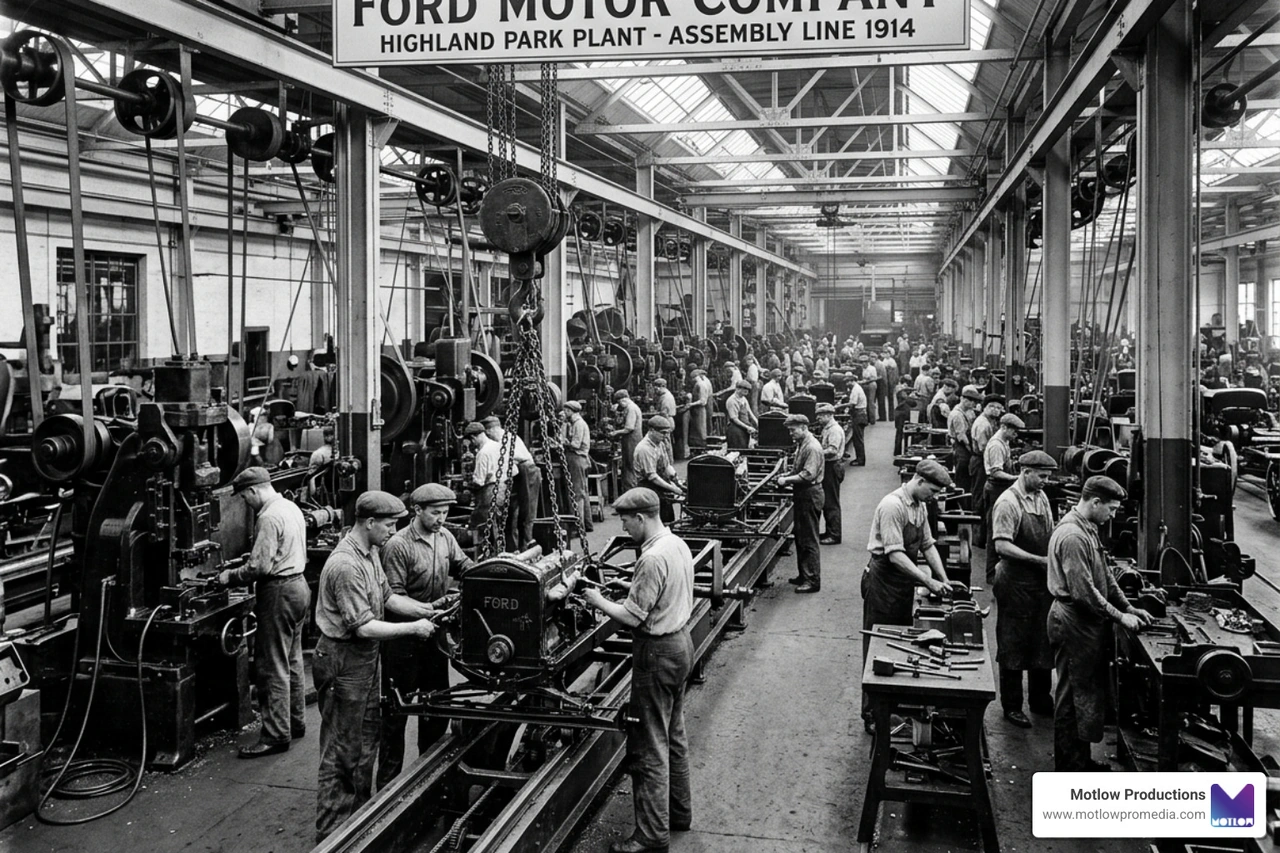
When we talk about the "how" of Large scale productions, we usually focus on three main methods:
In modern manufacturing, companies like Airbus treat their Production like a global orchestra. They have thousands of participants across the globe, all synchronized to ensure that parts from one country fit perfectly with parts from another.
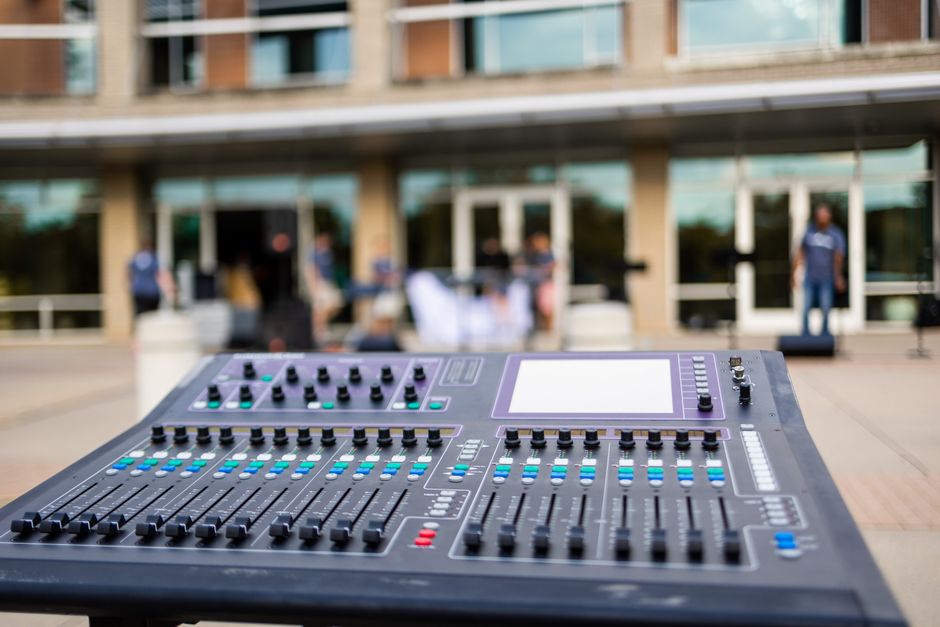
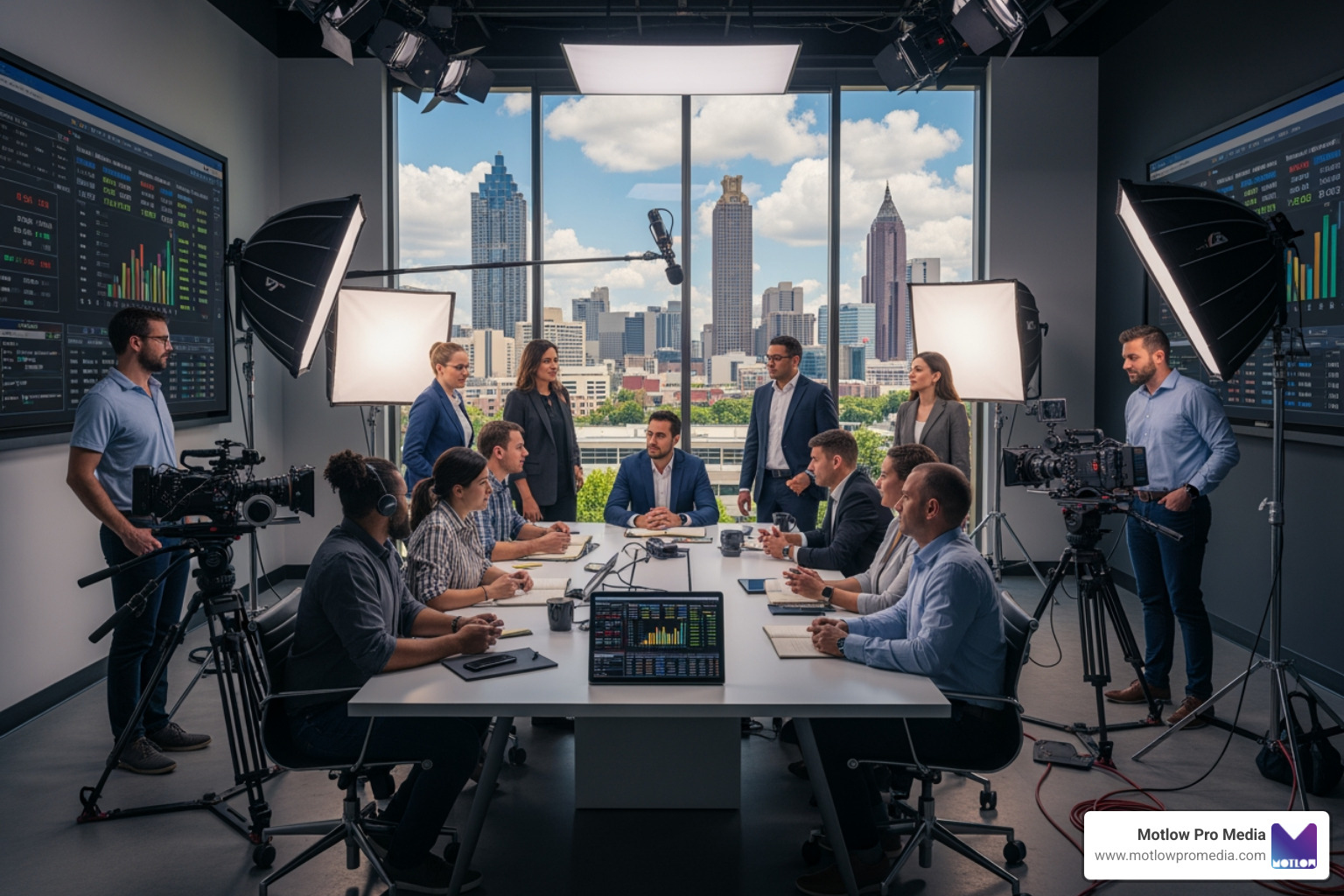
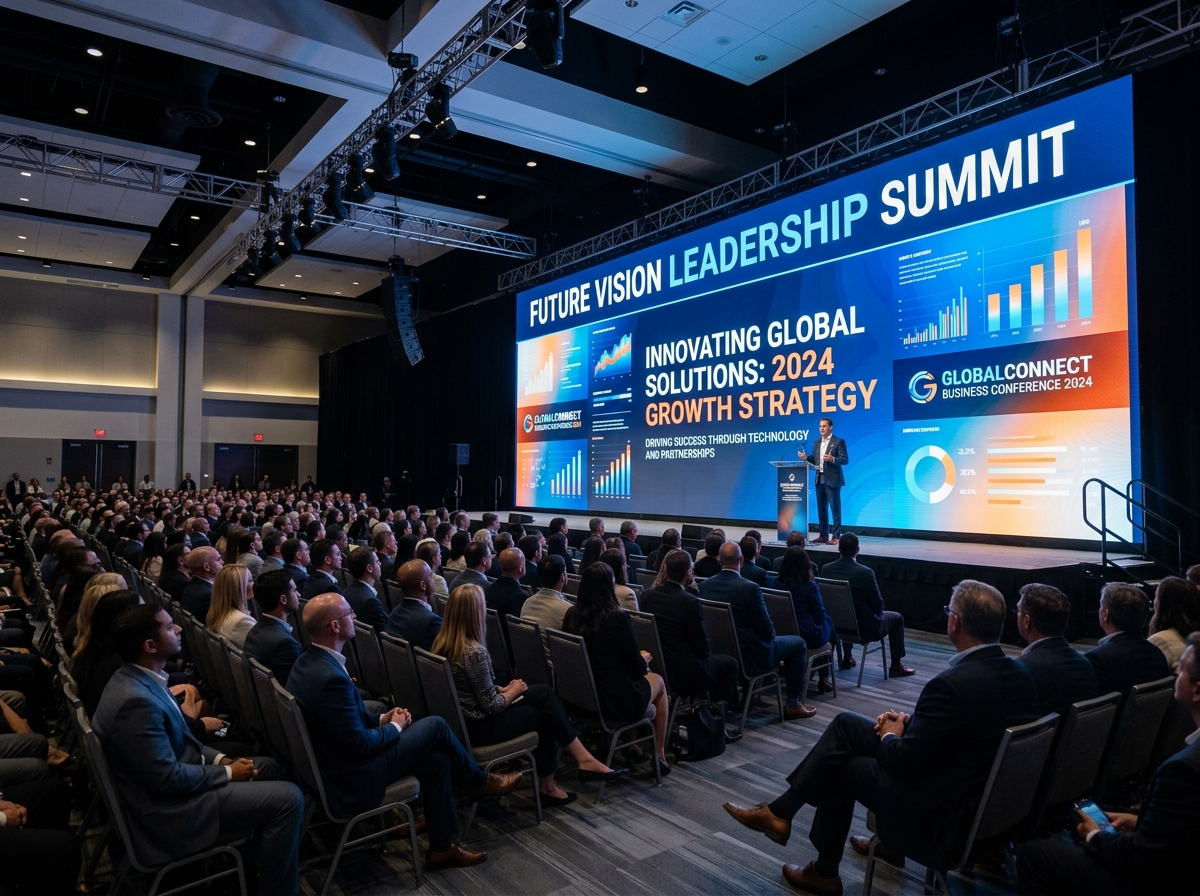
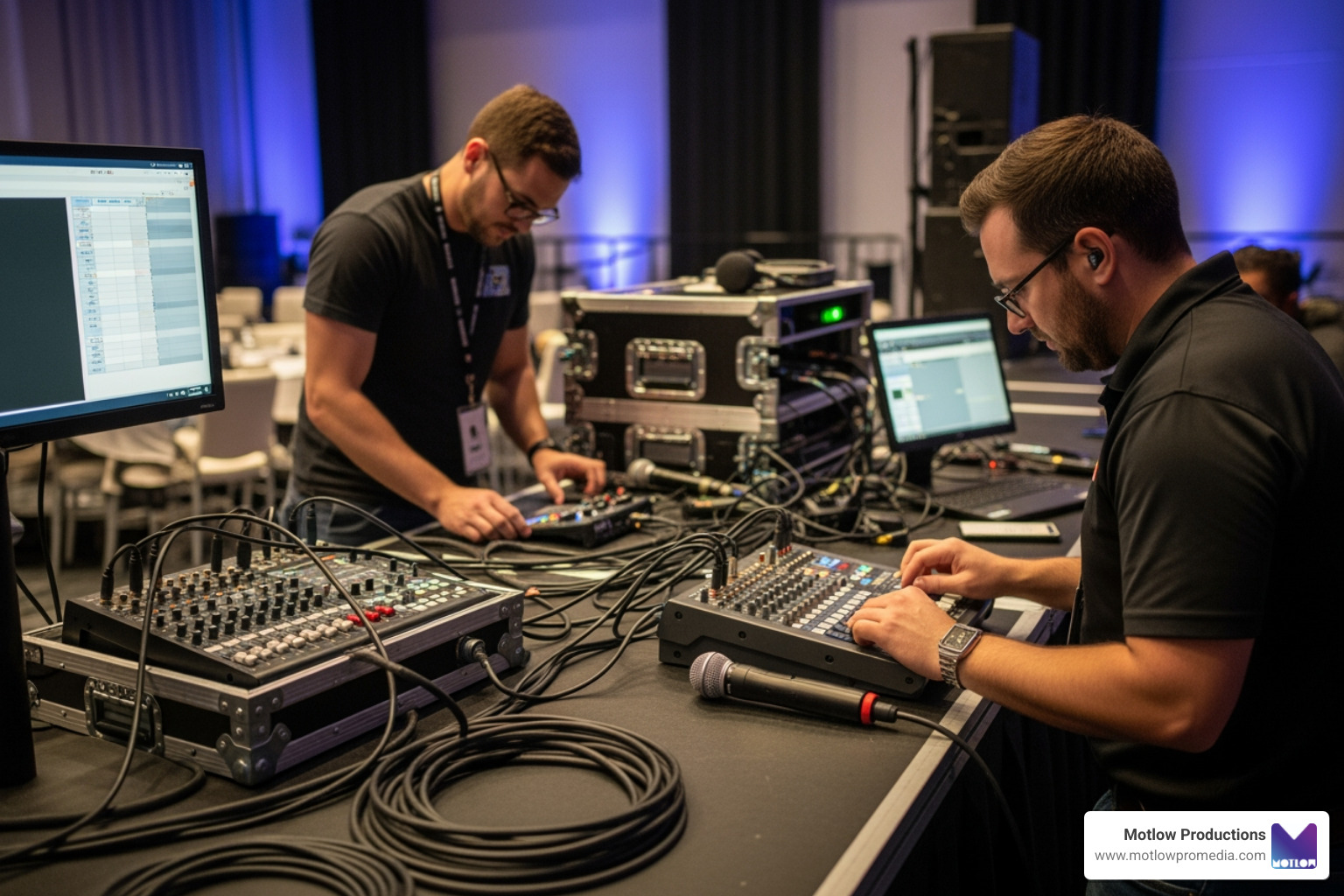
At Motlow Pro Media, we apply these same principles to Technical Event Production. We use process control and strategic sourcing to ensure that every "part" of your event—from the lighting rig to the live stream—works in perfect harmony.
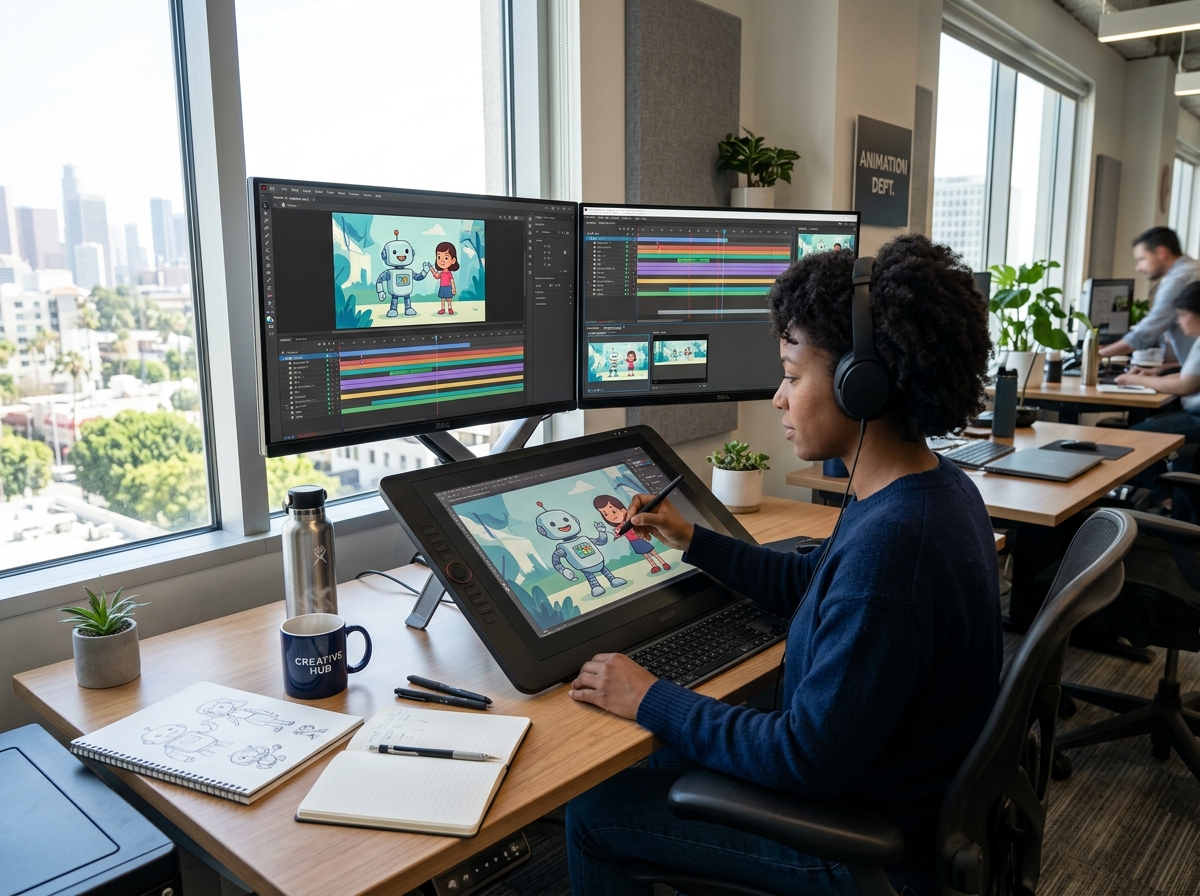
Technology is the engine of scale. We’ve moved far beyond simple conveyor belts. Today, we use AI to predict animal behaviors in films and virtual production tools to create entire worlds.
Take The Lion King (2019 film)) as an example. It used the Unity game engine and virtual reality tools to create a photorealistic CGI masterpiece. Only one shot in the entire movie wasn't animated! This is a prime example of how Audience Engagement Technology has transformed from a "nice-to-have" into the very foundation of the production itself.
Large-scale success depends on logistics. You can't build a massive aircraft or a global corporate summit without a supply chain that moves with you. Airbus, for instance, has 12 final assembly lines across five global locations. They say "the sun never sets on Airbus," and they aren't kidding.
In our work with Florida Event Production, we've learned that vertical integration and global synchronization are key. Whether you're shipping components for a plane or flying in specialized gear for a keynote, timing is everything. If one piece of the puzzle is missing, the whole line stops.
The biggest "pro" of Large scale productions is the economy of scale. As you produce more, the cost of each individual unit drops. This allows for massive reinvestment into Research and Development (R&D), which leads to even more innovation.
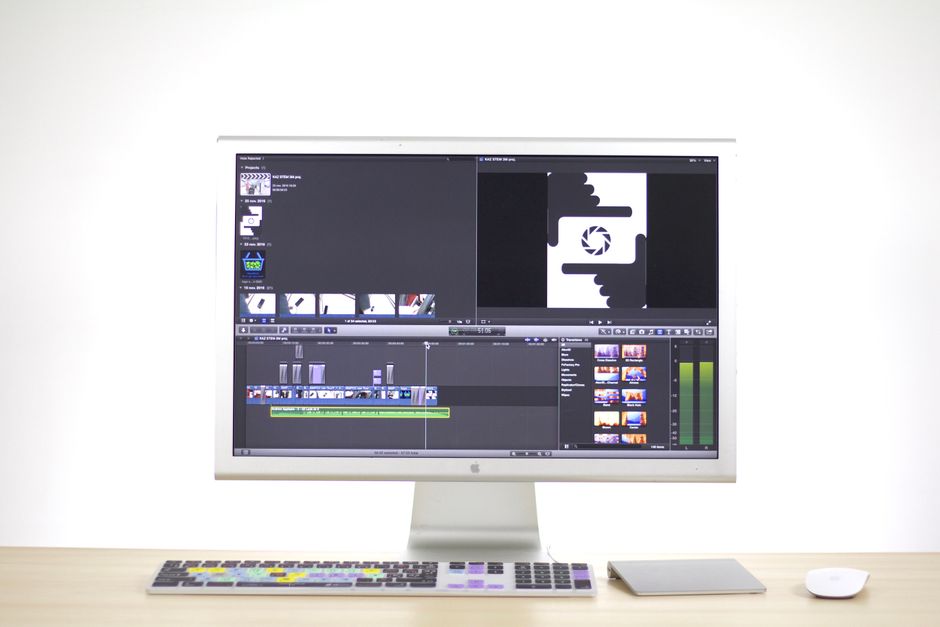
For our clients, following a Corporate Event Production Complete Guide allows them to reach wider audiences at a lower cost-per-head. By using Event Media Services, companies can turn a single live session into months of marketing content, maximizing their initial investment.
It’s not all sunshine and lower costs, though. Large scale productions are notoriously inflexible. Once you set up a line to make one thing, changing it is incredibly expensive.
History is full of cautionary tales. The Cleopatra (1963 film)) production nearly bankrupted its studio. Between script rewrites, star illnesses, and massive set builds in multiple countries, the budget ballooned to $31 million (an astronomical sum at the time).
Effective Event Production Management is about anticipating these risks. High initial costs are a given, but quality assurance and supply chain contingency plans are what keep a project from turning into a financial disaster.
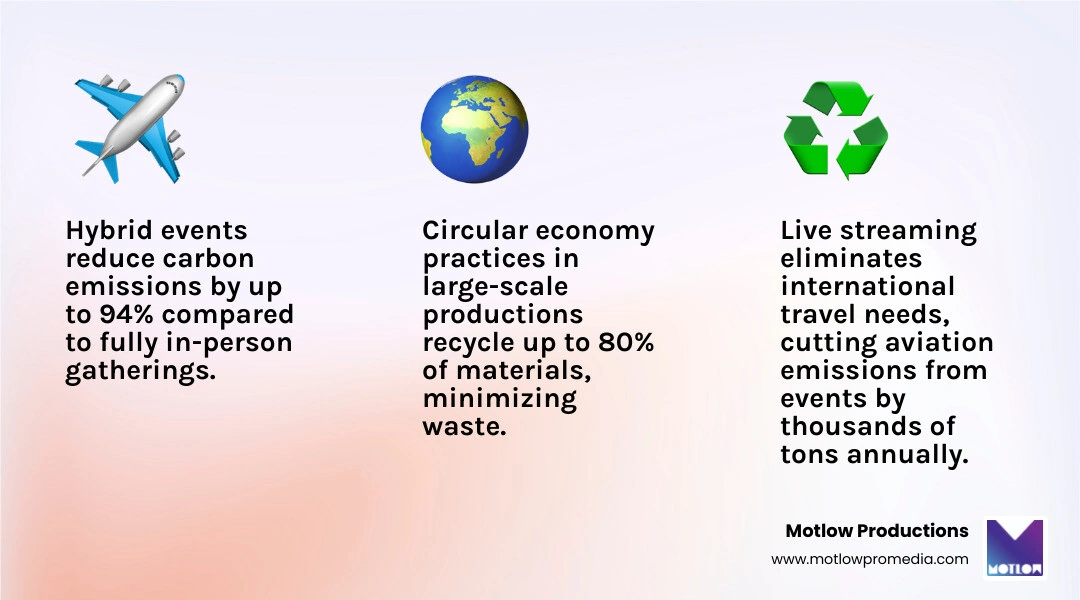
In 2026, we can't talk about scale without talking about the planet. Large scale productions have historically been criticized for overproduction and waste. However, centralized processes actually make it easier to implement waste management and eco-friendly technologies.
We are seeing a shift toward the "circular economy." By using Live Event Streaming, we can reduce the carbon footprint of international travel while still reaching a global audience. It's about being "hands-off, but hands-on"—managing the impact while maximizing the reach.
Large scale productions aren't just for car factories. They show up in the most unexpected places.
In the film world, the War and Peace (film series)) stands as a monument to scale. The Soviet government provided over 10,000 soldiers as extras for the Battle of Borodino. It remains one of the most expensive and grandest epics ever made, proving that when you have state-backed resources, the "production line" can be a literal army.
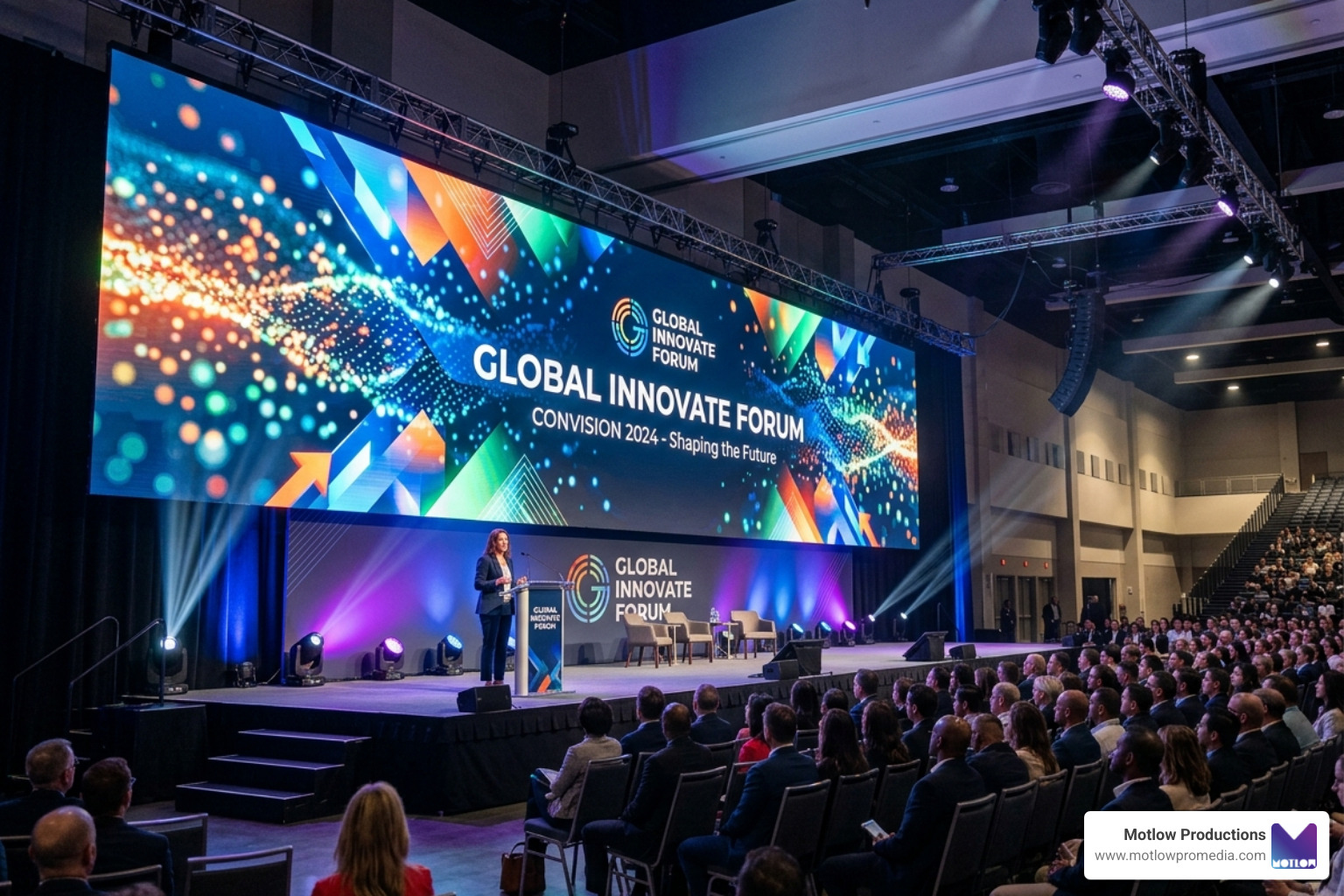
In the corporate world, we use Event Video Solutions to bring that same sense of "epic" scale to brand storytelling, minus the 10,000 soldiers (usually).
The stakes are even higher in life sciences. Early production of Factor VIII (for hemophilia) required nearly 5 liters of blood just to produce 250 units of concentrate. Today, we use bioreactors to scale vaccine production, like the EV-A71 vaccine, which can produce 50,000 doses from a single 40-liter batch.
Agriculture has also scaled up, though it brings challenges. In large-scale poultry farming, the high density of birds can lead to airborne fungal concentrations ranging from 97 to 440 × 10³ CFU/m³. This is why we emphasize Corporate AV Support for internal communications in these industries—managing safety protocols at scale requires crystal-clear communication.
Even our buildings are now products of mass production. During World War I, over 100,000 Nissen huts were mass-produced. These prefabricated structures could be erected in just a few hours.
We see this in the arts, too. Look at Les Misérables (musical)). It has played over 16,000 performances in London alone. To keep a show running for decades across the globe, you need a massive, synchronized logistics machine. Every prop, every costume, and every light cue is part of a Event Technical Support system that ensures the show is identical whether you're in London, Miami, or Orlando.
Batch production is for middle-of-the-road volumes (usually 100 to 10,000 units). It allows for some customization. Large scale productions are for 10,000+ units where the goal is maximum efficiency and the lowest possible cost per unit. Think of batch as "making 500 blue shirts" and large-scale as "making 500,000 identical white shirts."
The biggest risk is "cash burn." If you ramp up equipment and staff before you have a solid New Product Introduction (NPI) process, you risk producing sub-quality products or ending up with massive overstock. You also risk "cannibalizing" your own resources if your supply chain can't keep up.
We've moved from needing "brawn" to needing "brains." Instead of 110 people doing manual tasks, we now need 10 people who can program, maintain, and oversee the machines that do those tasks. Skill is now embedded in the tools and the processes rather than just the individual worker's hands.
Executing Large scale productions is a marathon, not a sprint. It requires a blend of historical wisdom—like the efficiency of the assembly line—and future-facing technology like AI and virtual production.
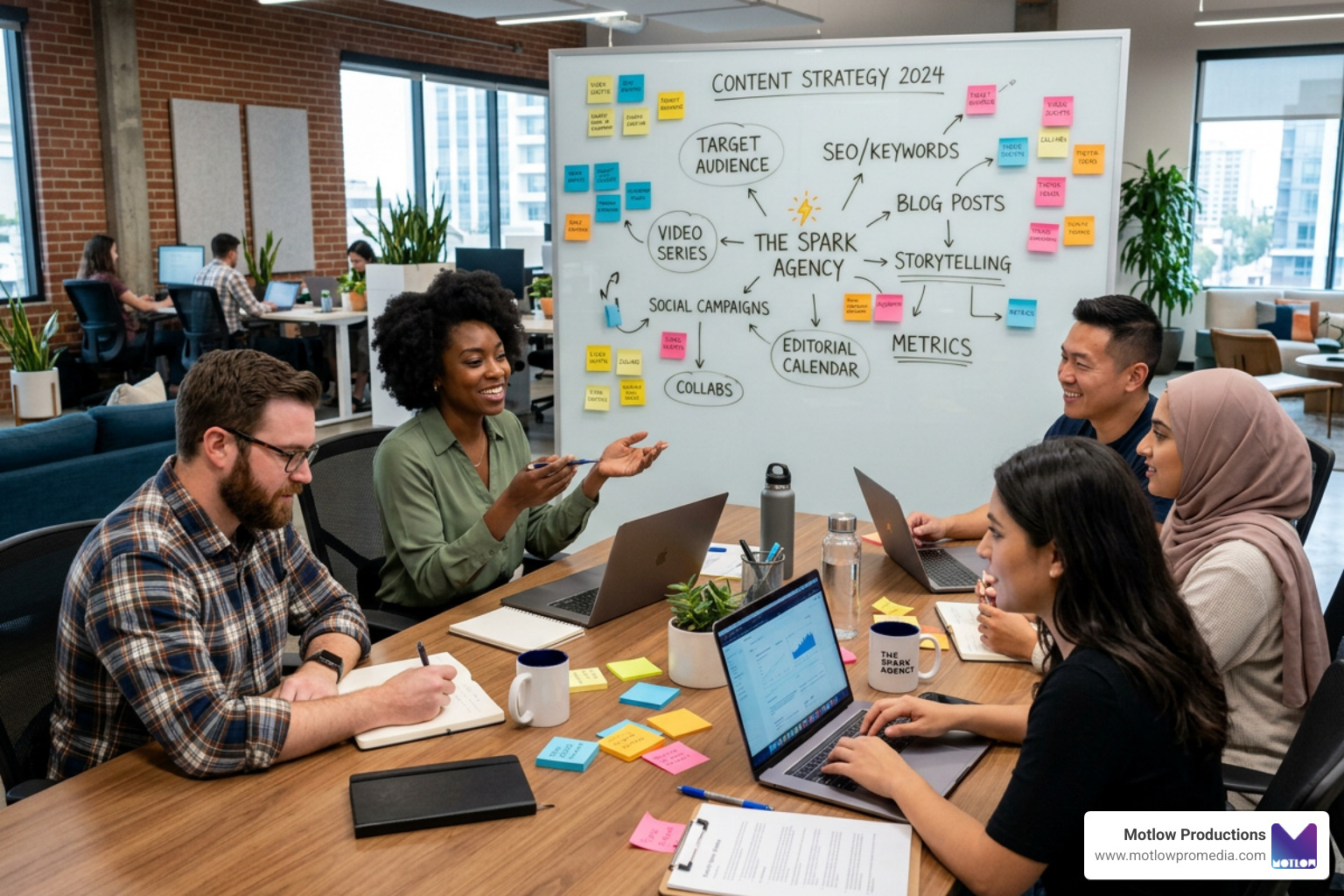
At Motlow Pro Media, we believe that the secret to success isn't just a big budget; it's the partnership. We offer a "hands-off, but hands-on" approach, acting as a trusted extension of your team. Whether we're supporting the Seminole Hard Rock Gasparilla Pirate Fest 2026 or managing a high-stakes corporate broadcast, our goal is seamless execution and clear communication.
Ready to take your project to the next level? We're here to provide the media leadership you need.
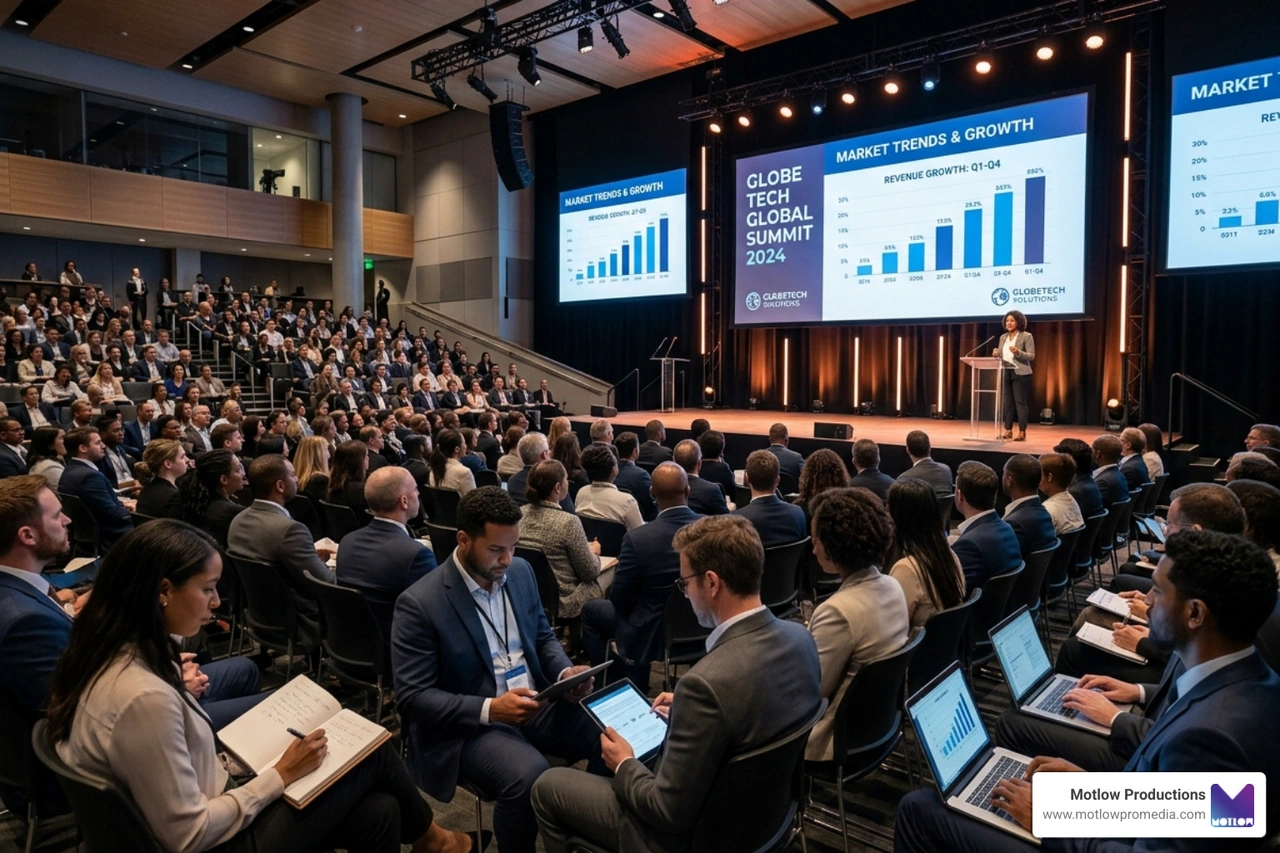
Some clients want to give notes in a live Zoom call. Others prefer a group text or email thread. However you like to communicate, we adapt. You’ll never be left guessing where things stand - and you’ll always have a say before anything goes out the door.





Phone:
+1 863-250-8639
.png)
Email:
info@motlowpromedia.com