What to Capture at Your First Corporate Event of the Year
This guide explains why the first corporate event of the year content matters and how companies can plan video, photography, event, and content assets that support real business use.
By Motlow Pro Media·Tampa, FL
Your first corporate event of the year is the best chance you’ll get to build a content library for the next twelve months. Corporate teams are being asked to create clearer, more useful content across more channels, and this event is a practical place to start.
Here’s what you need to know right away:
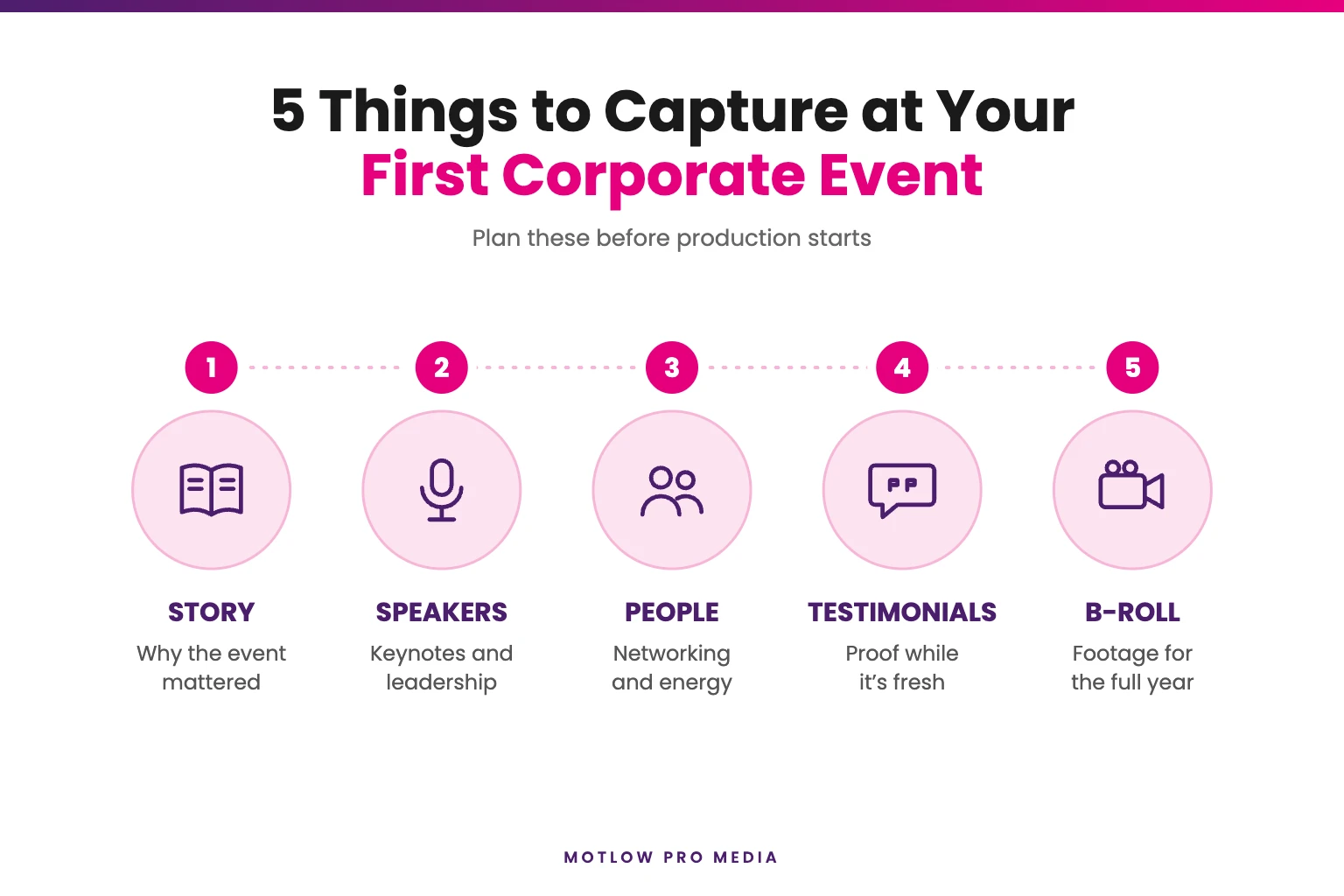
What to capture: the event story, speaker and leadership moments, people and energy, testimonials, and b-roll.
Who it’s for: event teams and corporate marketers who need content for marketing, sales, recruiting, and future events.
Why it matters: the first event sets the tone for your company’s event content library for the whole year.
When to plan it: before production begins, so the content supports more than one deadline.
For event teams and corporate marketers, the challenge is not simply producing another asset. The real goal is to use the first event of the year to create useful content for marketing, sales, recruiting, and future events while keeping the message organized, consistent, and easy to reuse.
When the work is planned early, production becomes more efficient. Through Motlow Pro Media’s corporate video, photography, event production, livestreaming, and content strategy services, companies can turn one planning moment into a stronger media system for the year ahead.
Document the story first. It gives the recap video and every post-event piece a clear direction.
Why the event mattered
Who attended
What was discussed
What the audience should remember
Record Speaker and Leadership Moments
Keynotes, panels, opening remarks, and leadership messages can each become:
Social clips
Internal updates
Email content
Sales assets
Photograph the People and Energy
Photos of people help future audiences understand what the event actually felt like. Capture:
Audience reactions
Networking
Team interactions
Sponsor moments
Candid conversations
Schedule Testimonials While People Are Present
Attendees, clients, sponsors, and speakers may only be available during the event. Book short interviews ahead of time. They become proof for future promotion and sales follow-up.
Capture B-Roll for the Full Year
The first event can produce footage you’ll use all year:
Future campaigns
Recruiting content
Sales decks
Social media
Next event promotion
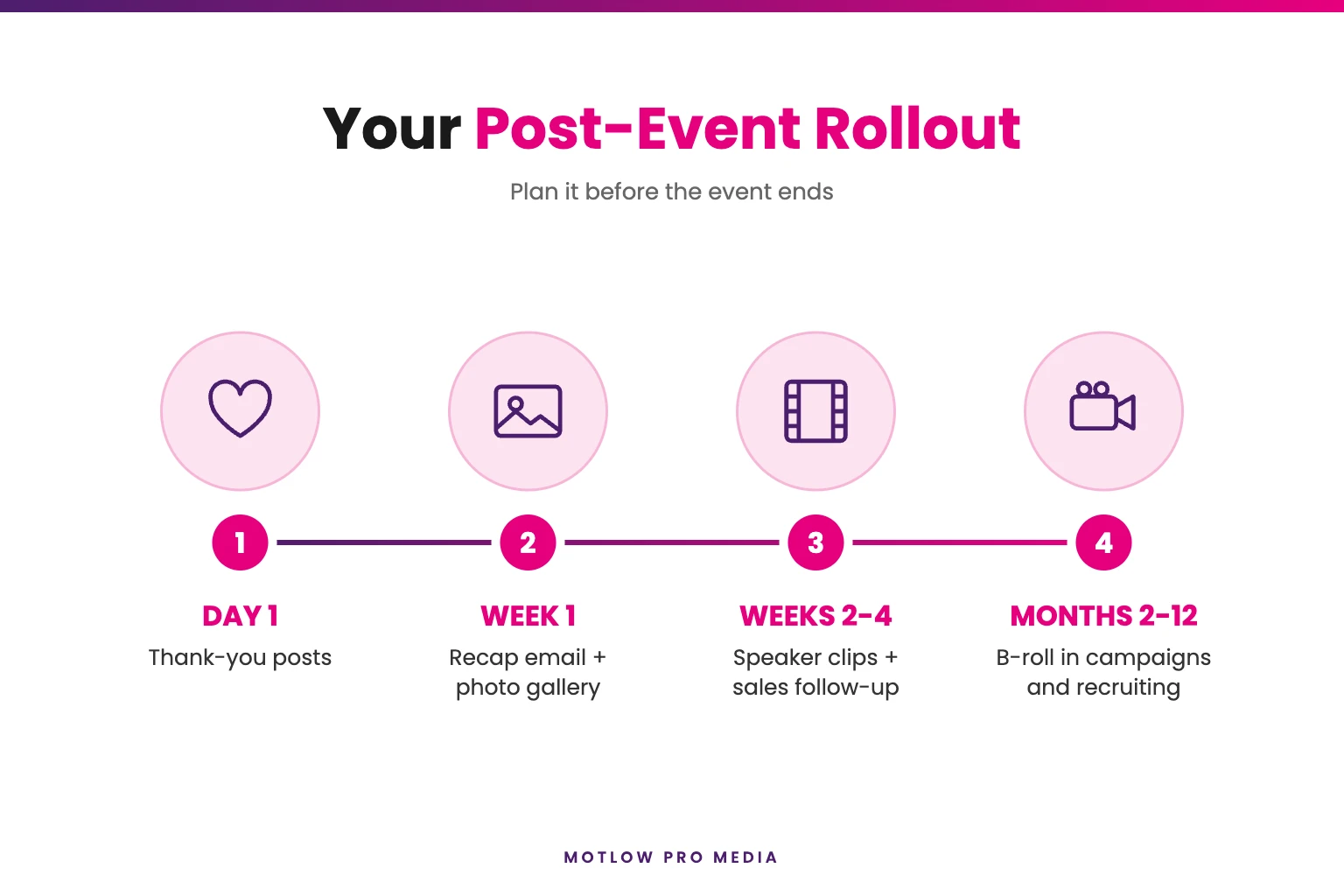
Create a Post-Event Rollout
Plan the rollout before the event ends, not after:
Thank-you posts
Recap emails
Photo galleries
Speaker clips
Sales follow-up
Putting This Into Practice
Start with a short working session that includes the marketing owner, the person responsible for production, and any team that will use the final content. Review the goal, audience, timeline, channel plan, and required deliverables before the first shoot, interview, livestream, or event day is scheduled.
For each item above, the team should know four things before production begins:
Who owns the decision
What assets are needed
What approvals are required
Where the finished content will be used
Then create a simple brief that another team member or production partner could execute without digging through old emails. It should list:
The message
Required assets
Speakers or participants
Shot list and locations
Approvals
Distribution plan
Repurposing opportunities
After publishing, review how the content was actually used. Note which assets supported sales, recruiting, internal communication, social media, email, or future planning. That review turns one project into a stronger standard for the next one.
Planning Checklist
Define the main event story.
Capture keynote, speaker, and leadership moments.
Photograph attendees, sponsors, signage, and networking.
Schedule attendee or client testimonials.
Record useful b-roll for future campaigns.
Create a post-event publishing schedule.
Frequently Asked Questions
Why is the first event of the year important for content?
It can provide early footage, photos, testimonials, speaker clips, and b-roll that support campaigns throughout the year.
What should be captured besides the stage?
Networking, audience reactions, sponsor moments, signage, team activity, interviews, and behind-the-scenes footage are all valuable.
Should testimonials be captured at the event?
Yes. Events are often the easiest time to capture attendee, client, sponsor, and speaker testimonials while the experience is fresh.
The Bottom Line
What you capture at your first corporate event of the year is not only a content decision. It’s a planning decision that helps companies create media with a clearer purpose, stronger reuse, and better alignment across departments.
When teams plan around audience needs, final deliverables, approvals, and distribution before production begins, the work is easier to execute and more valuable after delivery. The result is a content library that supports marketing, sales, recruiting, events, leadership, and internal communication all year.